
The remarkable story of Bernard de Waal
Bernard de Waal Arnhem April 11, 1892 – The Hague July 28, 1924
Author:
Annabel Junge
Introduction
One of the early test pilots was Bernard de Waal, from Arnhem, and a personal friend of Anthony Fokker. He became known as a pilot and flying instructor at Fokker. In 1913, his remarkable achievement was a flight from Berlin to Utrecht. He also became known for a series of passenger flights with Dutch officers to The Hague.
Bernard de Waal earned his FAI certificate (German Aviation Association number 255) in Mainz, Germany, on June 26, 1912, flying a Goedecker monoplane. Shortly thereafter, he was appointed chief pilot at Jacob Goedecker's aircraft factory at the Gonsenheim-Mainz airfield. He made an impression by completing numerous cross-country flights without incident. Some flights carried a passenger.
Not only land planes were flown across the Waal: with one at Goedecker
built flying boat, he took part in the 'Erste Deutsche Wasserflugmaschinen-Wettbewerb' which took place from 29 August to 5 September in Heiligendamm and where he received a consolation prize of 3,000 marks.
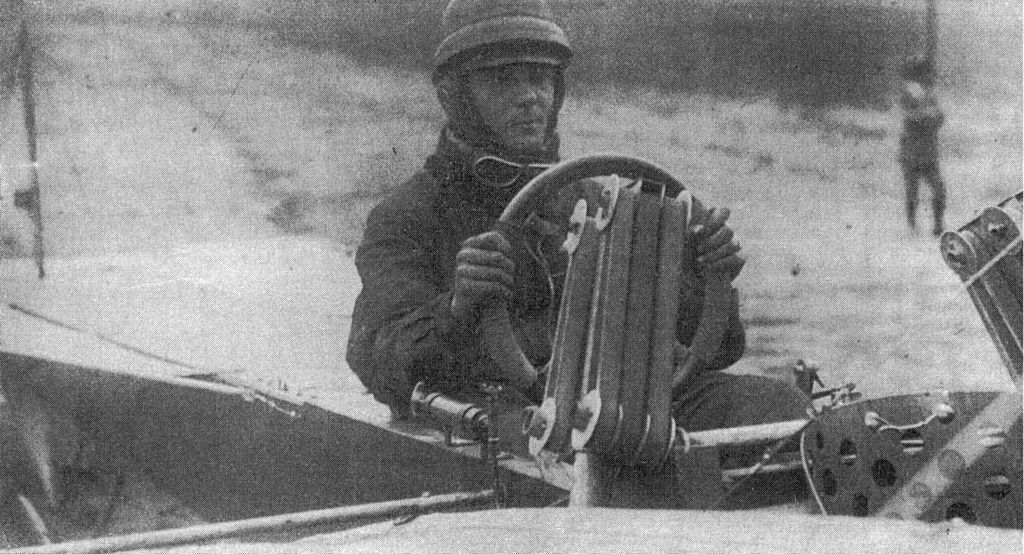
The flight school
When Fokker began building his Spiders in Johannistahl, Germany, in 1912, he also established a flying school there. This school was intended to train prospective (military) pilots, so they could fly the aircraft once they were purchased and transferred to a different country.
Both the factory and the flying school were moved to Schwerin-Görries in Mecklenburg, Germany shortly afterwards.
By early 1913, the Fokker flying school had 25 employees, and Fokker was looking for someone to take over management of the school so he could focus more on aircraft construction. He found that person in Bernard de Waal. His Dutch heart had a strong preference for Dutch aircraft. In March 1913, de Waal joined Fokker Aeroplanbau, initially as a test pilot and soon after, assuming overall management of the school.
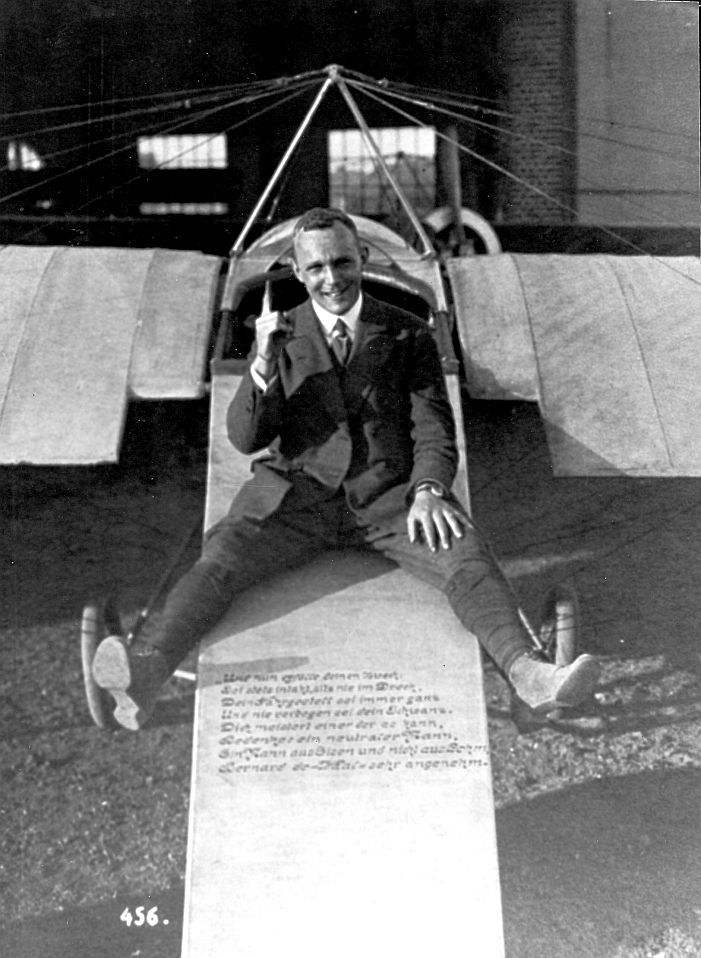
The flight with the Spin to Soesterberg
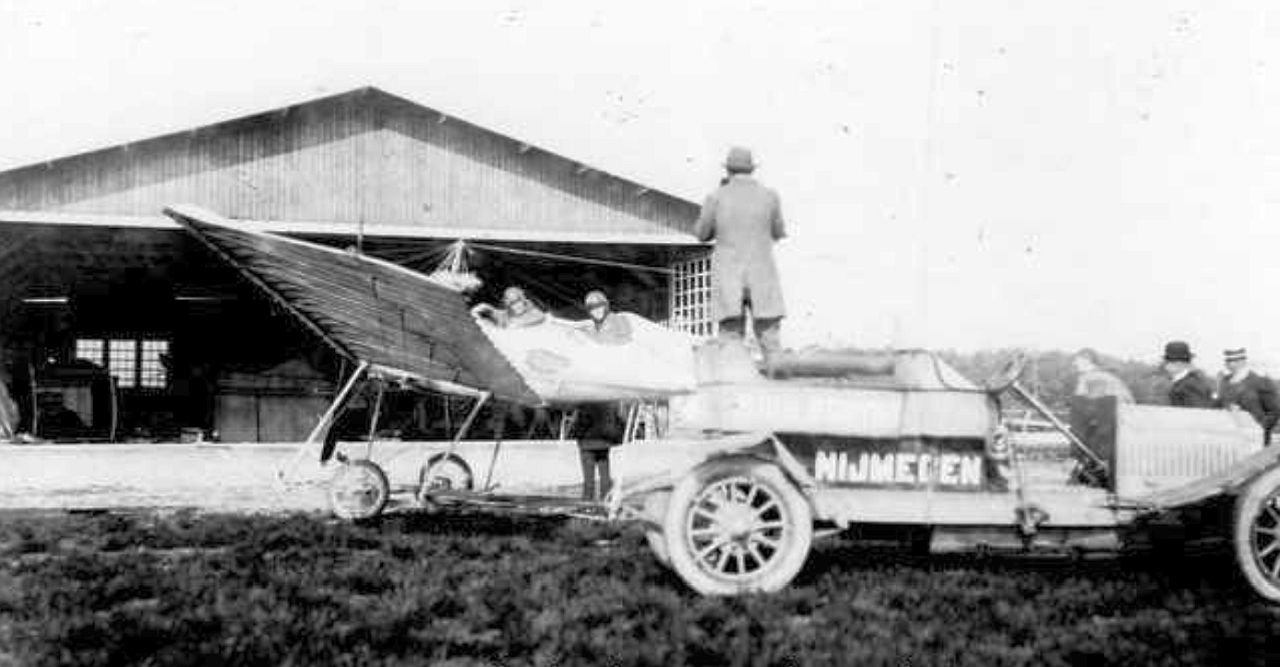
In May 1913, the Royal Netherlands Air Force (KNVvL) received a message from Germany that De Waal intended to fly to Soesterberg with a passenger. On May 13 of that same year, Bernard de Waal and Franz Küntner, also a pilot and a technician at Fokker, made a long-distance flight from Berlin-Johannisthal via Hannover and Hengelo to Soesterberg in the Fokker Spin Variant M1 aircraft. They took off just after 3:30 in the morning with 110 liters of gasoline and 40 kg of oil. The only additional equipment was a large ship's compass, an adjustable wrench, and a few spark plugs. After landing on the Vahrenwalder Heath near Hannover, where they had to wait a long time for gasoline and oil, the flight resumed at 10:15.
The flight went smoothly until Porta Westphalica, but after that the aircraft started to bob up and down violently due to the vertical air currents created by the heat of the sun.
A thunderstorm broke out between Osnabrück and Bentheim. The plane flew straight through it, as people didn't yet know how dangerous flying through a thunderstorm was. The Fokker was thrown into every possible position and sometimes stood on one wing. At one point, Küntner even found himself hanging from the wing's bracing wires. Several times, both pilots thought their end was near, but fortunately, they came through the storm unscathed.
Near Hengelo, De Waal was so exhausted that he decided to land somewhere. The monoplane landed on a small patch of heathland where they were enthusiastically received by the people of Twente.
At 6:17 PM, the Spin took off again, following the railway line to Zutphen and from there to Arnhem, where De Waal circled his parents' house. When Soesterberg came into view after a total flight time of approximately 26 hours, it was already getting dark. De Waal saw the Zeist air base, but couldn't find the airfield. Suddenly, he spotted a biplane in the sky. It was Lieutenant Versteegh, who had taken off specifically with Van Meel's brig to guide De Waal to the air base, and soon both planes were in the hangar at Soesterberg. There, too, enthusiasm was high. De Waal later declared that he had mostly "flown on the sun." He didn't have an air map of the Netherlands, but he had made good use of Ten Brink's pocket atlas.
Meanwhile, the Royal Netherlands Air Force (KNVvL) had asked De Waal if he would give a demonstration in The Hague. The intention was to interest the Dutch military authorities in Fokker products. De Waal agreed, and on May 18th, he and Küntner, again accompanied by Versteegh, departed for the residence, where they landed on the grounds behind Houtrust after a successful flight. The authorities certainly showed considerable interest, and friendly words were exchanged. However, due to the poor weather, demonstrations were hardly possible, and consequently, nothing was purchased. On May 23rd, both pilots departed for Soesterberg. Yet, this visit was not entirely in vain, as it laid the foundation for the LVA's later important contracts with Fokker.
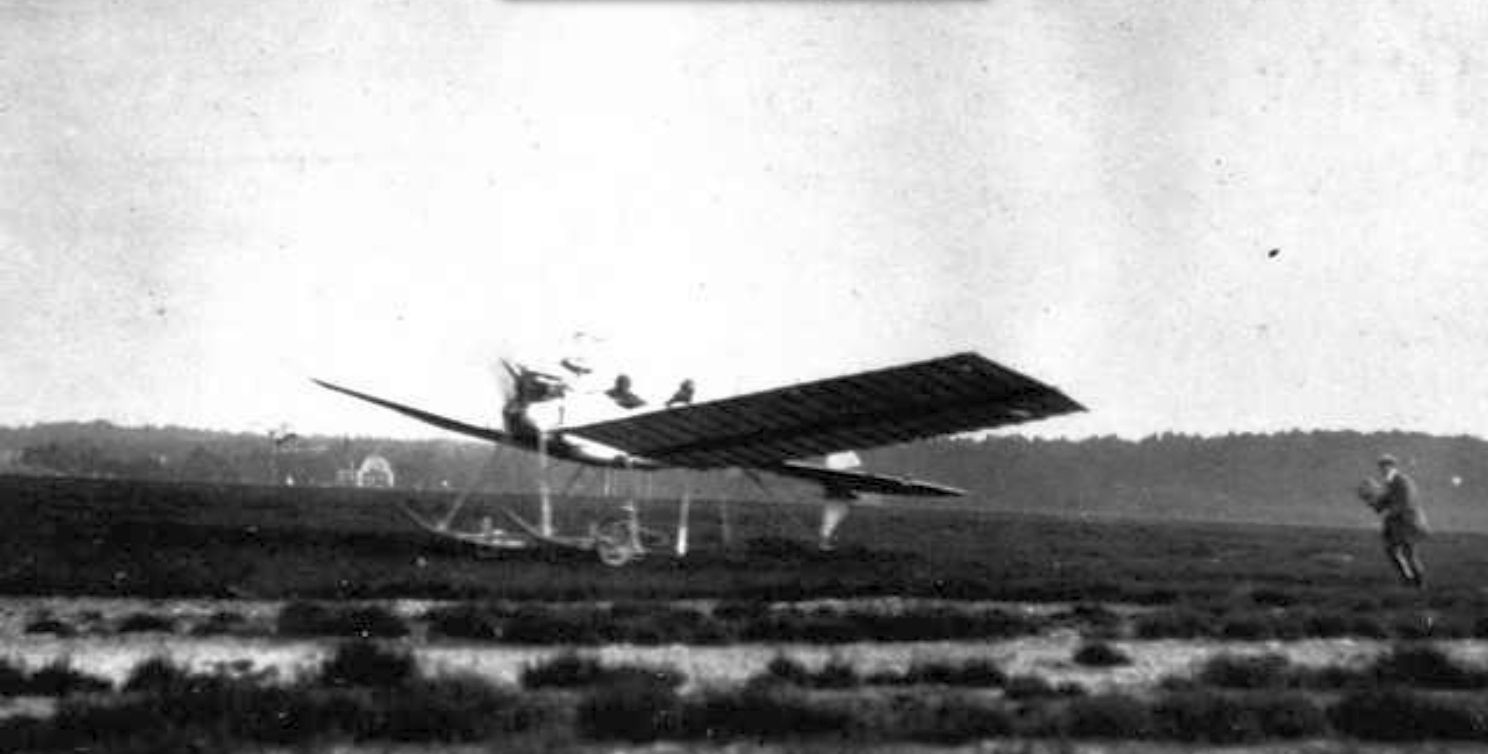
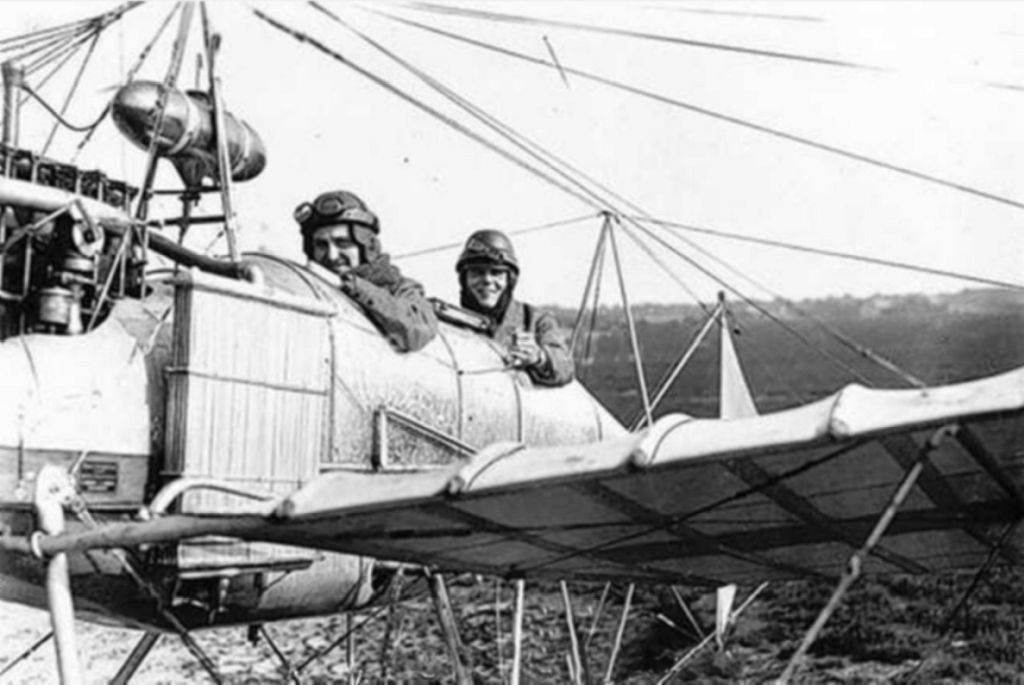
The next day, De Waal took off for a flight to Nijmegen, but due to an engine failure, he was forced to make an emergency landing near Veenendaal. The aircraft overturned and was destroyed. The two occupants suffered only minor bruises. The remains of the M-1 were returned by train to Berlin-Johannisthal, and the two pilots also turned their backs on the Netherlands.
Test flights
Bernard de Waal was an excellent pilot and – after Anthony Fokker himself – often made various test flights with the Spinnen (Spiders), the Spin variants and later with the M-types.
Even when existing aircraft had undergone changes to improve their flying characteristics, it was De Waal who made a number of flights to assess those changes.
Later, De Waal was also responsible for the so-called acceptance flights, the last flight of an aircraft before it was delivered to a customer.
The Fokker F.II
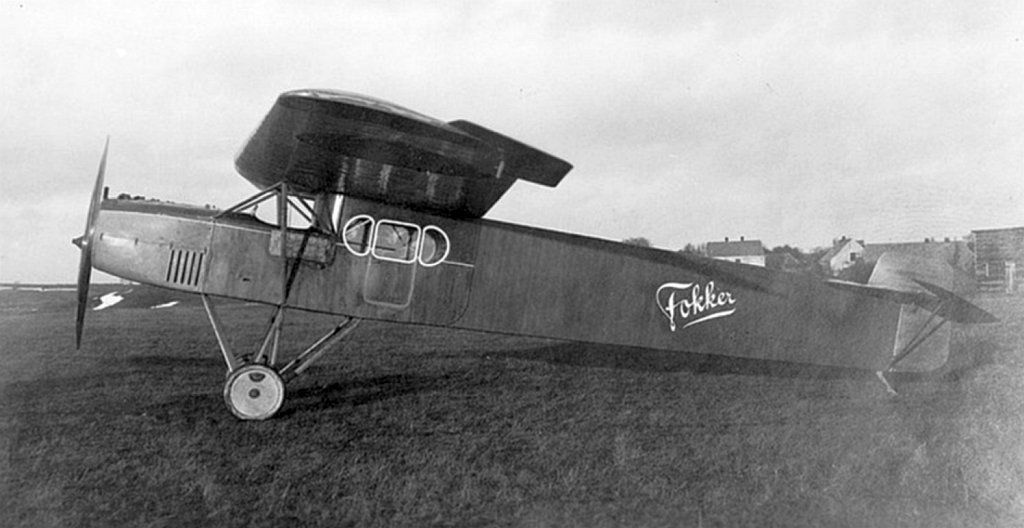
In the spring of 1920, De Waal delivered Fokker's first airliner, the F.II*[1] From Schwerin to the Netherlands. Although it was more likely a case of theft than a regular flight, despite the order coming from the company itself. Fokker was already established in Amsterdam, but the Allies prohibited the import of aircraft from Germany.
Bernard de Waal arrived in Schwerin disguised to avoid detection. There, he identified himself to Reinhold Platz, the chief engineer, and confided in him that he had been tasked with flying the F. II prototype to the Netherlands. To reinforce his illegality, De Waal also brought along a sewing machine – which was scarce in the Netherlands.
After takeoff, directly from the hangar, problems quickly arose. Due to engine failures, De Waal was forced to make two emergency landings on German soil. The first emergency landing went smoothly. During the second, however, two police officers appeared out of nowhere. De Waal explained in broken German that he was a Dutchman who had gotten lost in German airspace. One of the officers replied that he was going to inquire with the Landsrat (local police officer), while the other stayed behind with De Waal. The latter was so brazen as to ask if the officer would be kind enough to help crank the propeller so he could warm up. The officer trusted De Waal, but as soon as the engine was running, the pilot took off. However, the troubleshooting wasn't over yet, as De Waal discovered over the Netherlands.
Near Surhuisterveen in Friesland, De Waal had to land again, breaking his landing gear. Takeoff was impossible, so he called Anthony Fokker, who rushed to Friesland to see his plane for the first time. Once there, the decision was made to dismantle the aircraft and transport it by train to Leeuwarden. From there, the plane would be transported to Amsterdam by boat.
Platz had designed the F. II as the first passenger aircraft, and he had serious concerns about its safety for future passengers. A concern that later proved unnecessary. The aircraft was not only sufficiently powerful, but also economically built. No component was too heavy or too large.
[1]Originally called the V 45. 'V' stood for Versuchsmachine, or prototype.

The end
Bernard de Waal remained with Fokker until his death, dying suddenly on July 28, 1924, in The Hague after a short illness caused by a throat infection. He was buried at Moscowa in Arnhem.