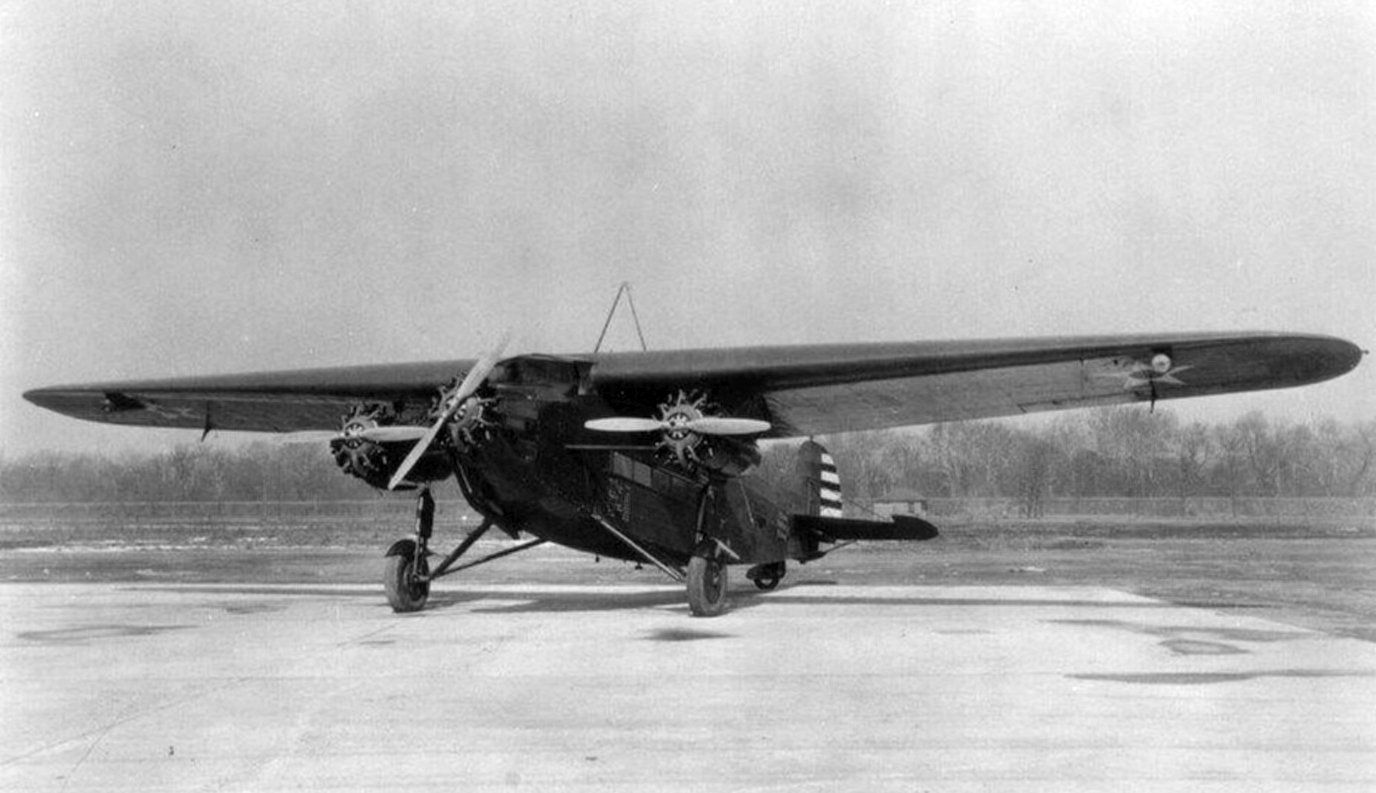
Fokker Model 15, F-9, C-7A
This is one of the lesser-known models from the American Fokker factory. It is generally thought that the Model 15 was assigned to the FLB flying boat for the US Coast Guard, as it was also designated as AF-15.
However, this type designation is separate from the model number.
In early 1929, Fokker introduced the F-9 as a slightly smaller F-10. It was suitable for 10 passengers and equipped with the new Wright J-6 Whirlwind engines. As a result, the type could be offered at a much lower price than the F-10A.
The new engine had already been tested on the military C-7 and TA-3 (both Model 7) and delivered good performance.
However, there was no interest from the airlines in the new F-9. During the period of prosperity, many F-10s/F-10As had already been ordered. Moreover, Fokker was still making extensive changes to the design. This also did not contribute to gaining confidence.
It was different with the Air Corps.
There had already been extensive discussions with Fokker regarding additional orders for the C-2. However, when the existing aircraft were equipped with the J-6 engine (and designated as C-7s), attention shifted to a new type with that engine.
Fokker named the new type C-2B during that phase.
Although the F-9 differed from the C-7 in a number of respects, the new six aircraft for the Air Corps were designated as C-7A (29-407/412). The order for this was issued on June 13, 1929. The most striking differences from the C-7 were the shorter fuselage, the somewhat more pointed nose, and the larger vertical stabilizer like the XLB-2 had.
Production took place at the factory in Glen Dale, WV. There, it soon became a welcome addition to the winding-down production of the F-10A.
The six aircraft were delivered between March and July 1930. Due to the negative economic conditions, the interest of airlines in the aircraft had completely disappeared by then.
In June 1930, Rickenbacker, Fokker's vice president of sales, made another attempt to secure a follow-up order for the C-7A. However, this was unsuccessful.
Most of the aircraft remained in service until 1934. They each logged between 1,400 and 2,000 flight hours during that period.
Only the 29-411 continued flying until early 1936. Then a minor crack brought its career to an end.
It was also the only one of the six that was taken out of service due to an accident.
Click on the photo to enlarge it.