
The recovery of the Fokker F-VIII Duif (Pigeon)
February 28, 2001
Salvage of Fokker F.VIII in jungle
From our domestic editorial team
SCHIPHOL – Employees of the National Aviation Museum Aviodome went to an Indian tribe in the Amazon region of Venezuela this week to recover a Fokker F.VIII from 1927.
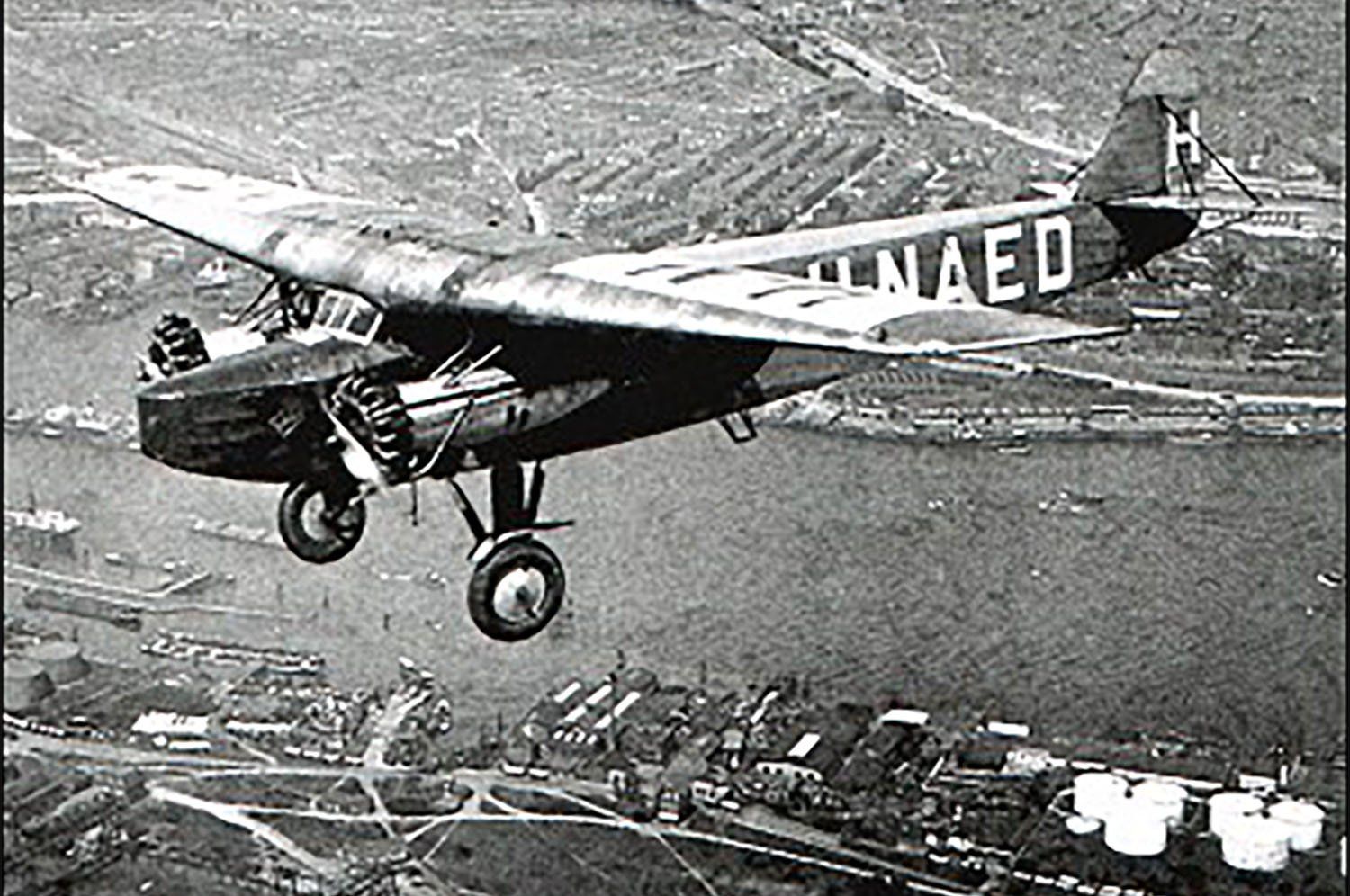
The aircraft in question is the Duif, a passenger plane built in the 1920s and constructed of wood, linen, and metal. Although the wood and fabric have disappeared, the tubular steel fuselage is still in reasonable condition. The remains of the two engines are also still present. The ten employees want to bring the remains of the plane, discovered a year and a half ago, to the Netherlands.
The Duif flew for KLM in Europe from 1928 to 1937. After that, KLM used the aircraft in the Dutch West Indies (Suriname and the Netherlands Antilles). The aircraft was sold to Venezuela in 1939. Within a month, it crashed into the jungle on a too-small airstrip. One wing touched the ground, and the aircraft caught fire. The aircraft burned out, and the crew managed to reach civilization again after a few weeks.
Tip
Until two years ago, aviation historians believed that no pre-war KLM aircraft existed anywhere in the world. For years, it was assumed the aircraft was lost, until Aviodome staff received a tip from Venezuelan colleagues during a museum conference in Washington in 1999 that remains of the aircraft still existed.
Six months after the tip, the museum assembled a three-man search party. In Caracas, they found the pilot who had flown the Fokker in 1939. Thanks to his information, they managed to reach the area where the plane was located by air.
A helpful chief of a local Native American tribe agreed to point out the Fokker's location. The expedition noticed that several parts from the aircraft had already been put to use by the Native Americans. The aircraft's fuel tanks were being used to brew a native beer. The chief himself kept the pilot's seat as a trophy in his hut. The Aviodome hopes to recover these parts as well. In return, the Native Americans will receive new tanks for brewing beer.
The plan is for a Cougar helicopter and a Lockheed Hercules transport aircraft from the Venezuelan Air Force to fly the parts to the coast for further transport by ship. After recovery, the remains are expected to be on display at the Aviodome Aviation Museum at Schiphol Airport in early May.
Heydays
The Fokker F.VIII was the only twin-engine passenger aircraft Fokker built before World War II. Other passenger aircraft built by Fokker during its heyday—around 1930, Fokker was the world's largest aircraft manufacturer—usually had three engines.
Fokker designed the F.VIII in 1926 for KLM as a successor to the faithful single-engine F.VIIa on KLM's European network (then limited to Brussels, Paris, London, Hamburg, Copenhagen, and Malmö). This network had been experiencing increasing passenger volumes, rising from 6,000 in 1926 to 13,000 in 1927. The Fokker F.VIII "De Duif" was built in 1927 by the Fokker factory in Amsterdam-Noord. The aircraft had seating for fifteen passengers.
Source: Reformatorisch Dagblad https://www.rd.nl/oud/bin/010228bin07.html