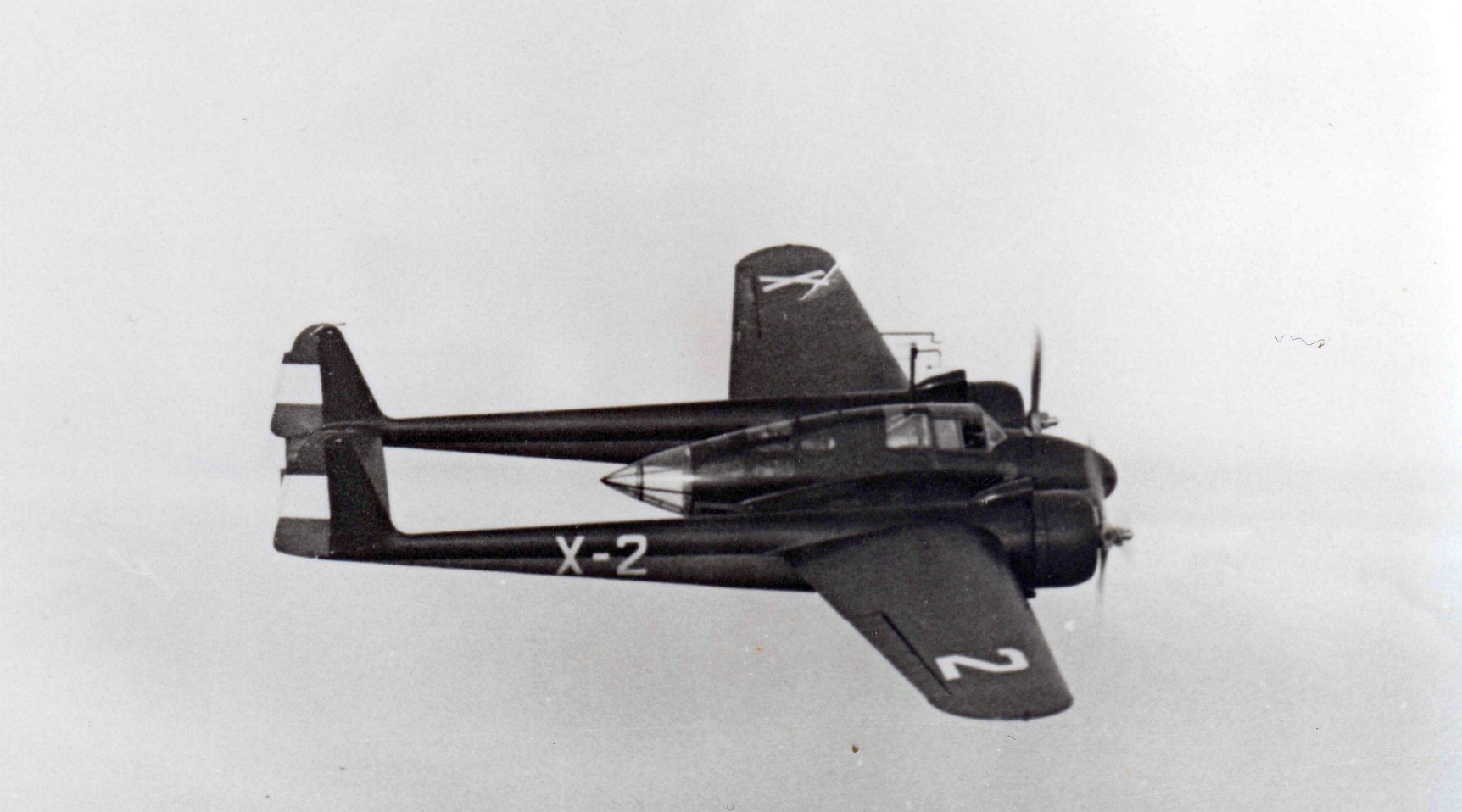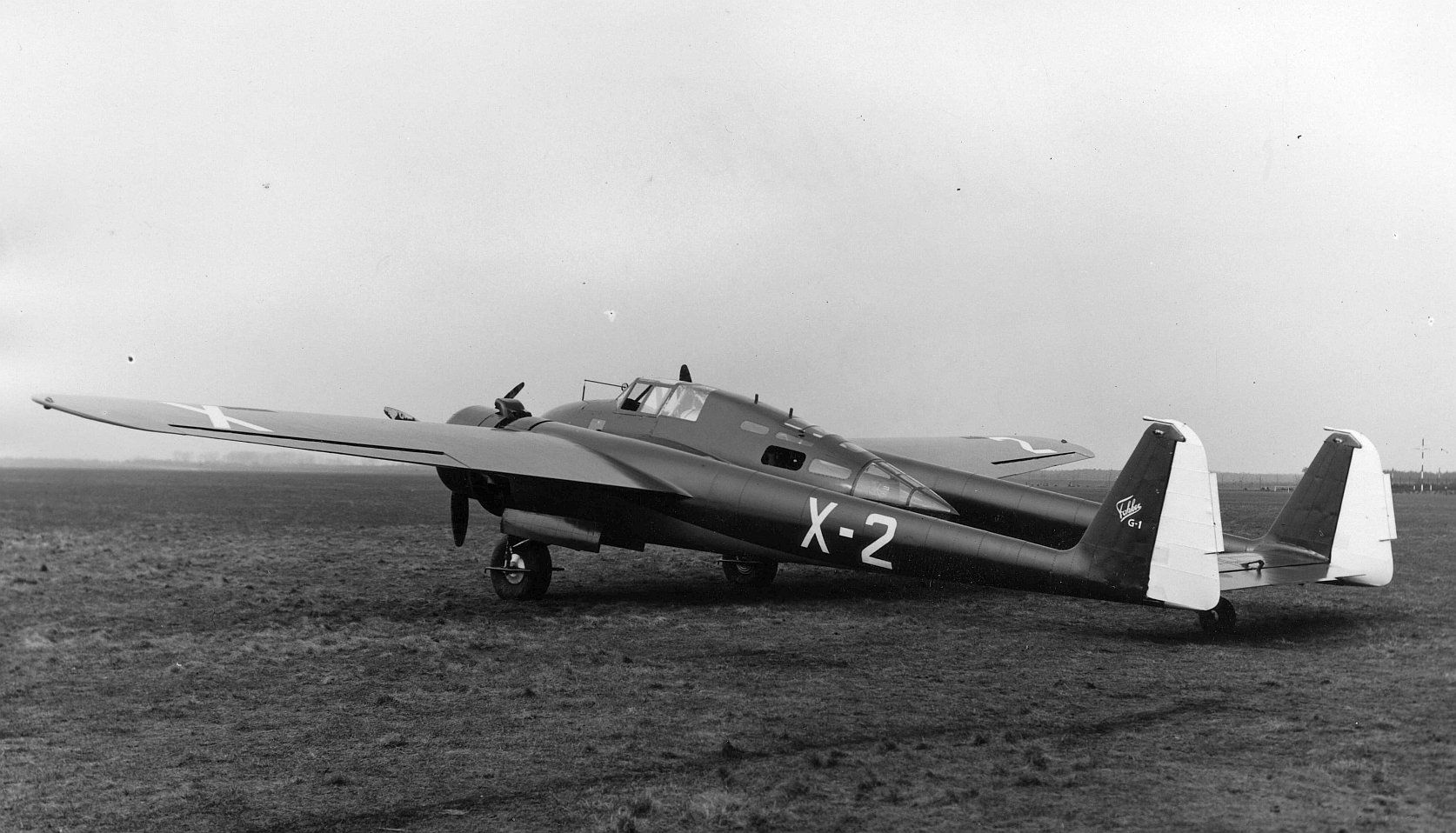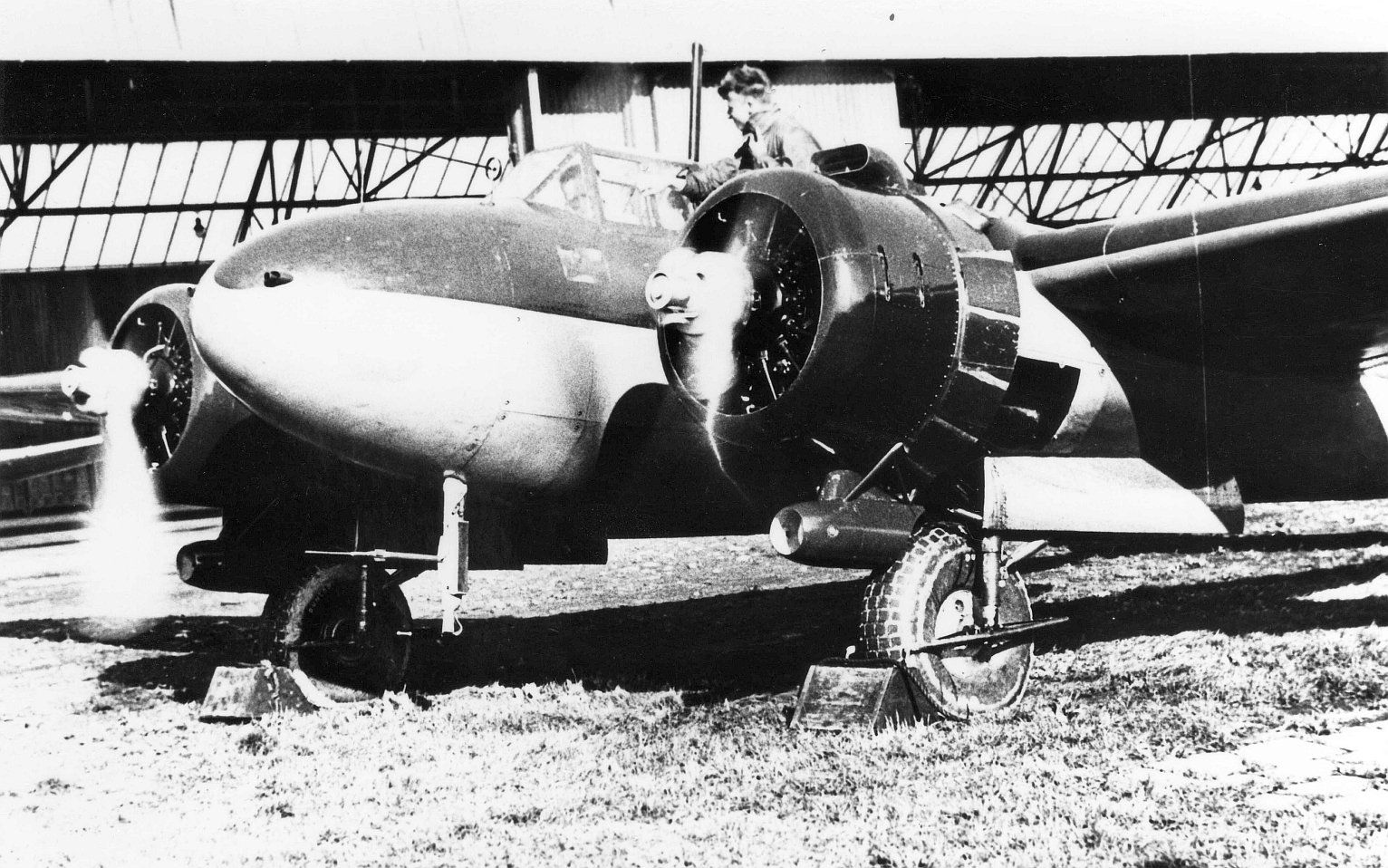
The Fokker G.1 prototype
The Mower or The Faucheur
It is the nickname quickly given to the prototype of the Fokker G.1 on the drawing board from 1934.
A truly revolutionary yacht cruiser for 2 or 3 crew members.
Unlike many other new fighter aircraft, the G.1 was designed entirely independently by the Fokker factory.
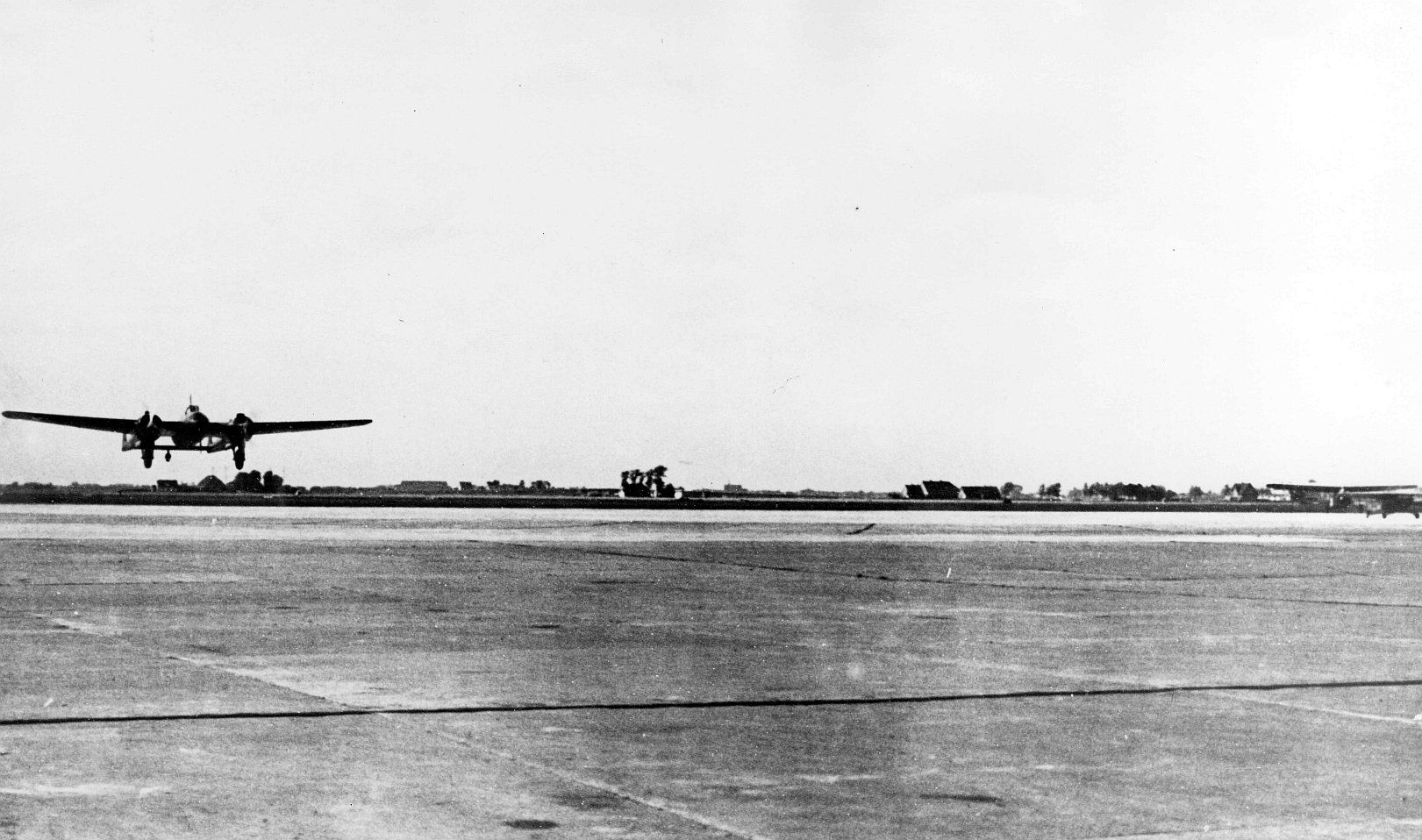
The first flight takes place on March 16, 1937 at Welschap-Eindhoven airport.
The first test pilot is the Czech Mares. Emil Meinecke and Gerben Sonderman follow.
Ir. M. Beeling, who has been doing scientific work at Fokker for some time, is responsible for the entire design.
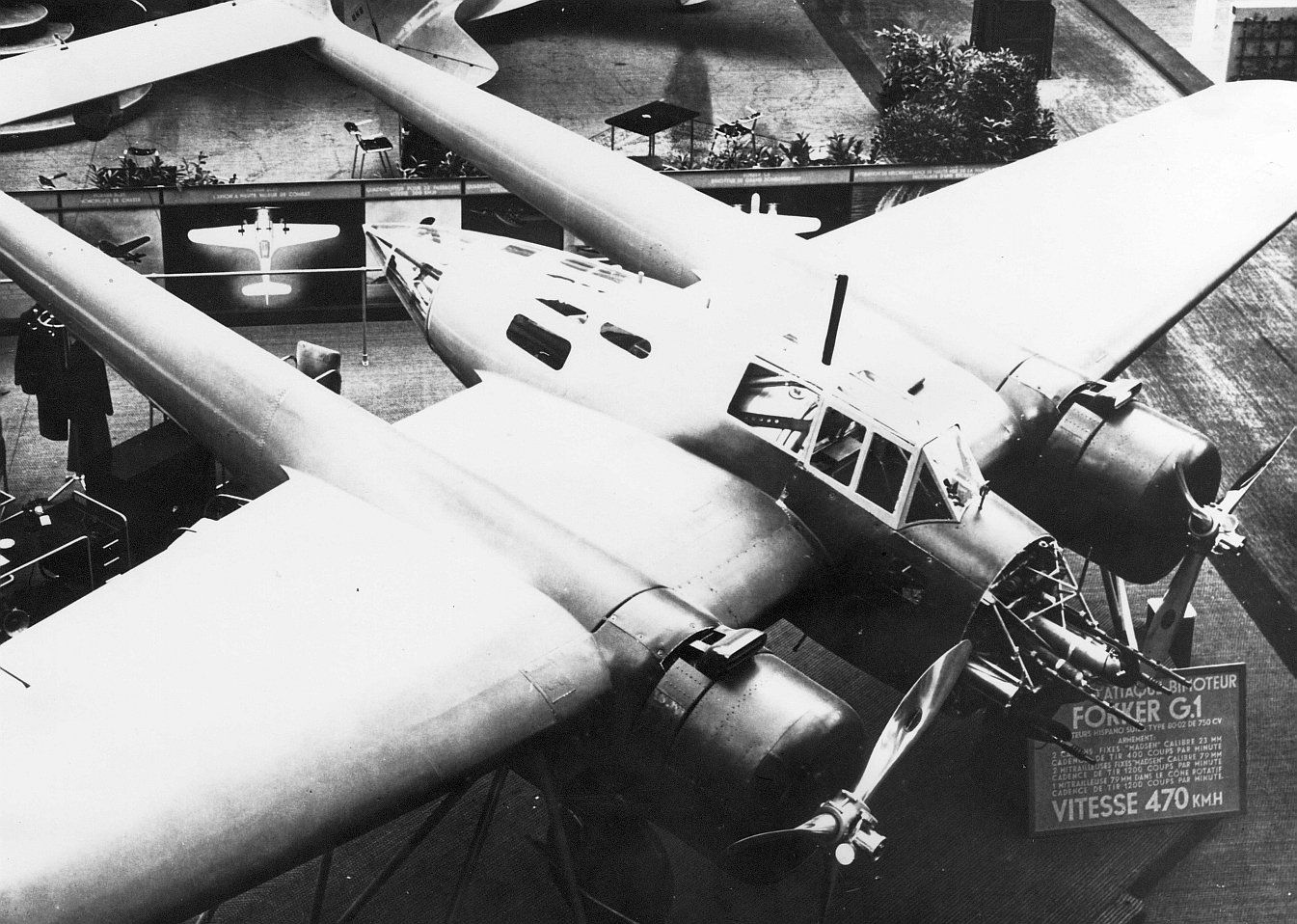
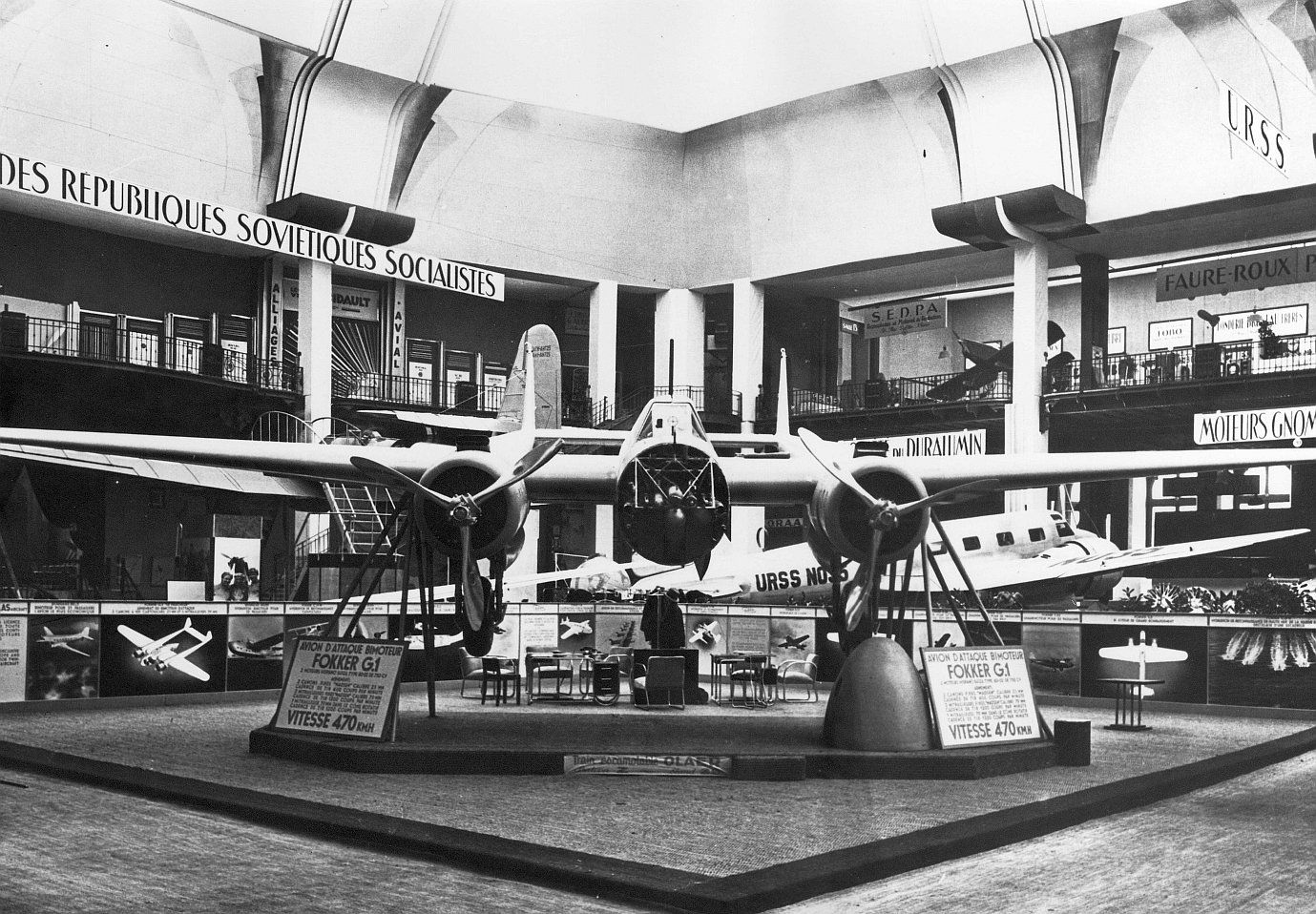
The first structure was already on display at the Paris Air Show in November 1936.
In addition, the necessary armament is still lacking.
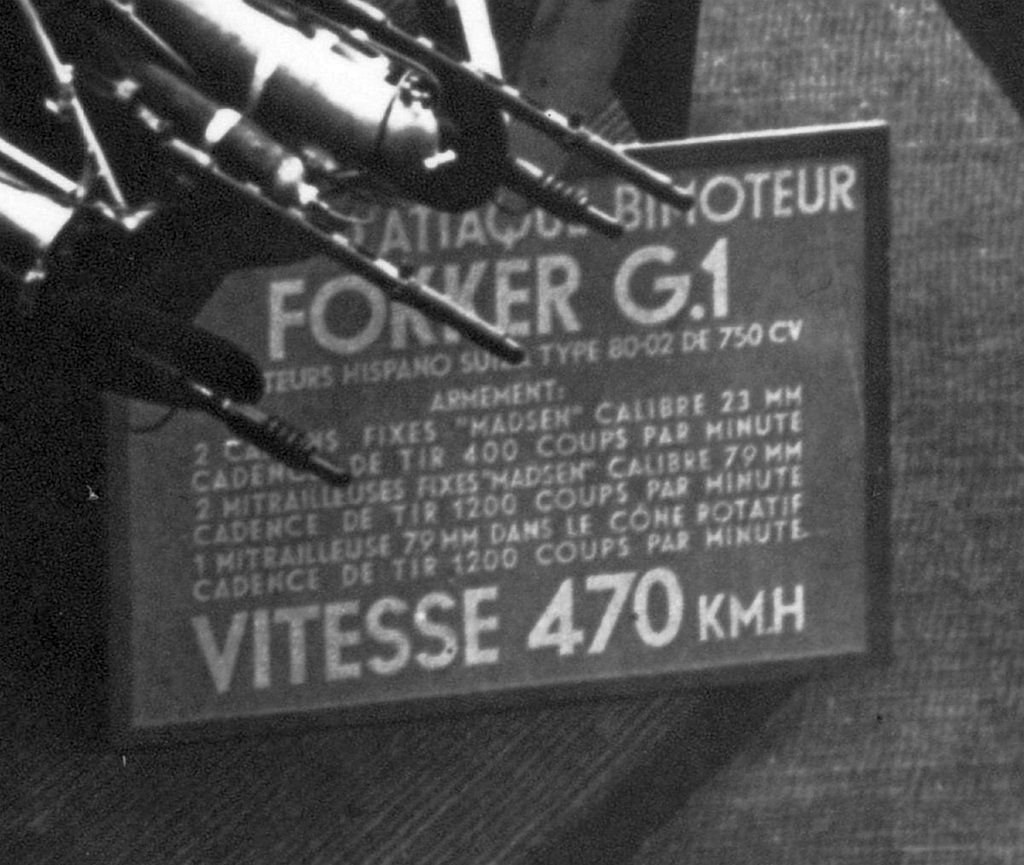
By the way, the specification of that armament is clearly stated.
The letter G indicates the completely new character of this type, namely a cross between a reconnaissance aircraft, a bomber aircraft and a fighter aircraft.
The continuation of the test flights takes the G.1 to Amsterdam and Soesterberg.
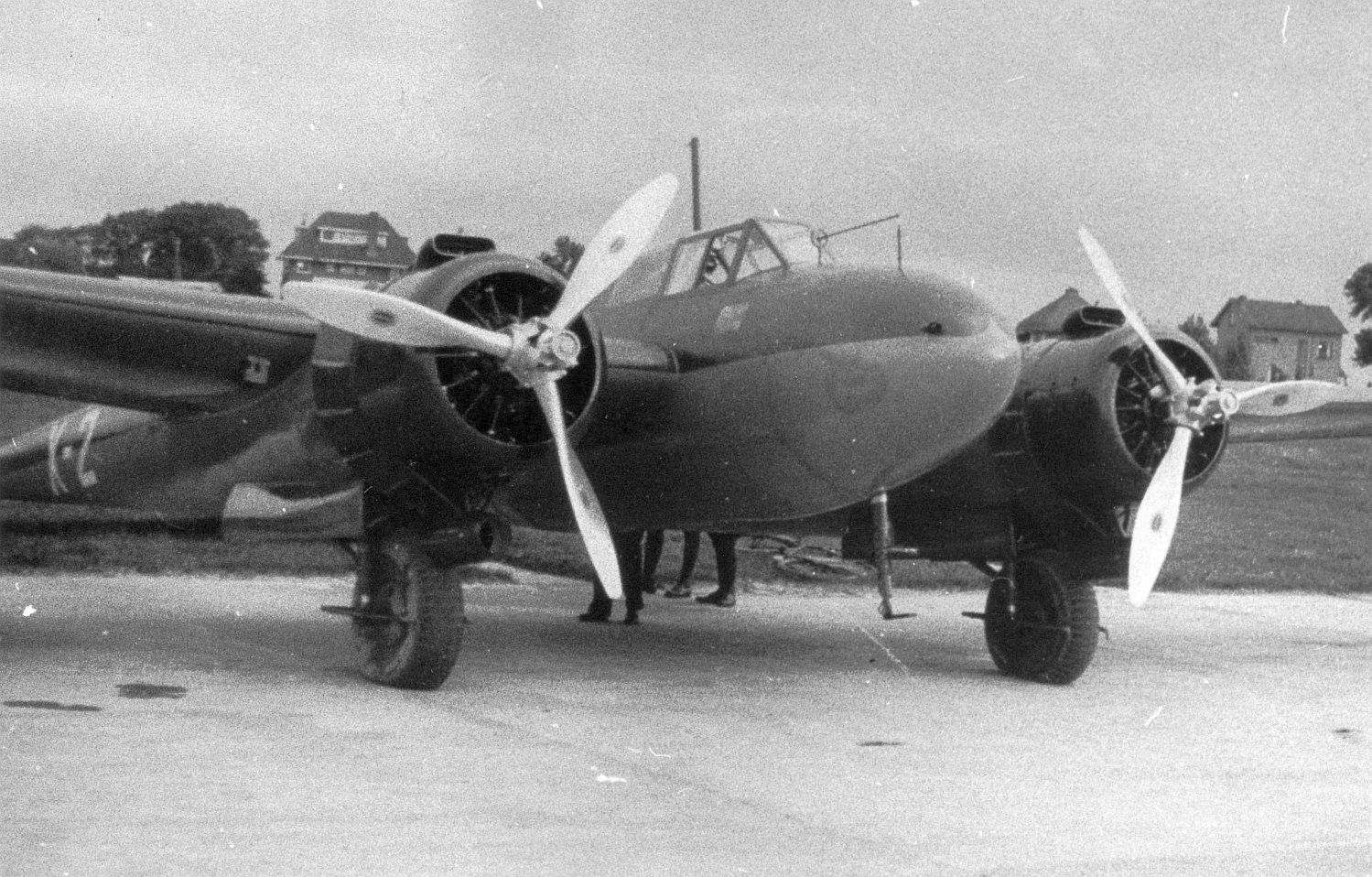
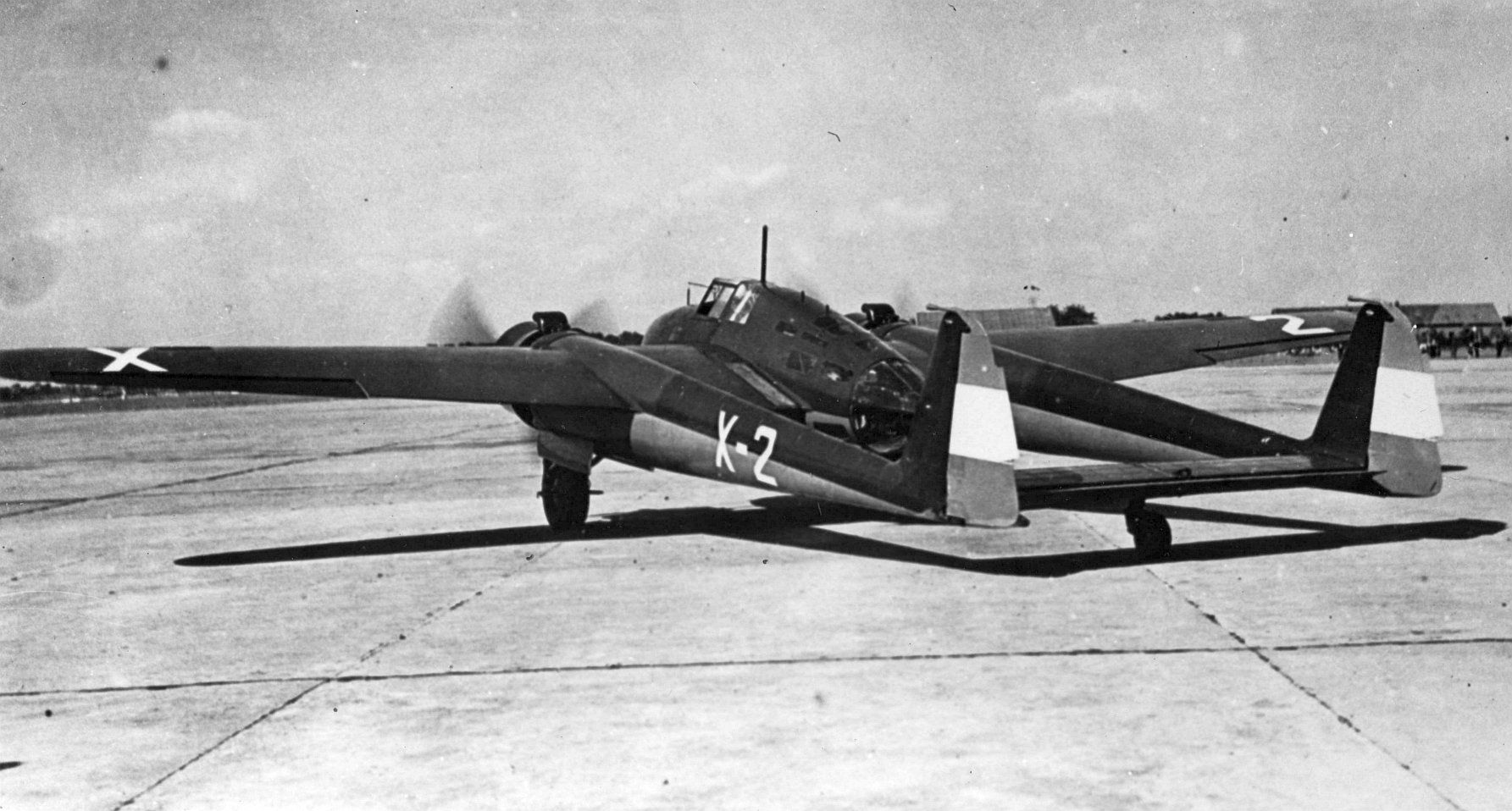
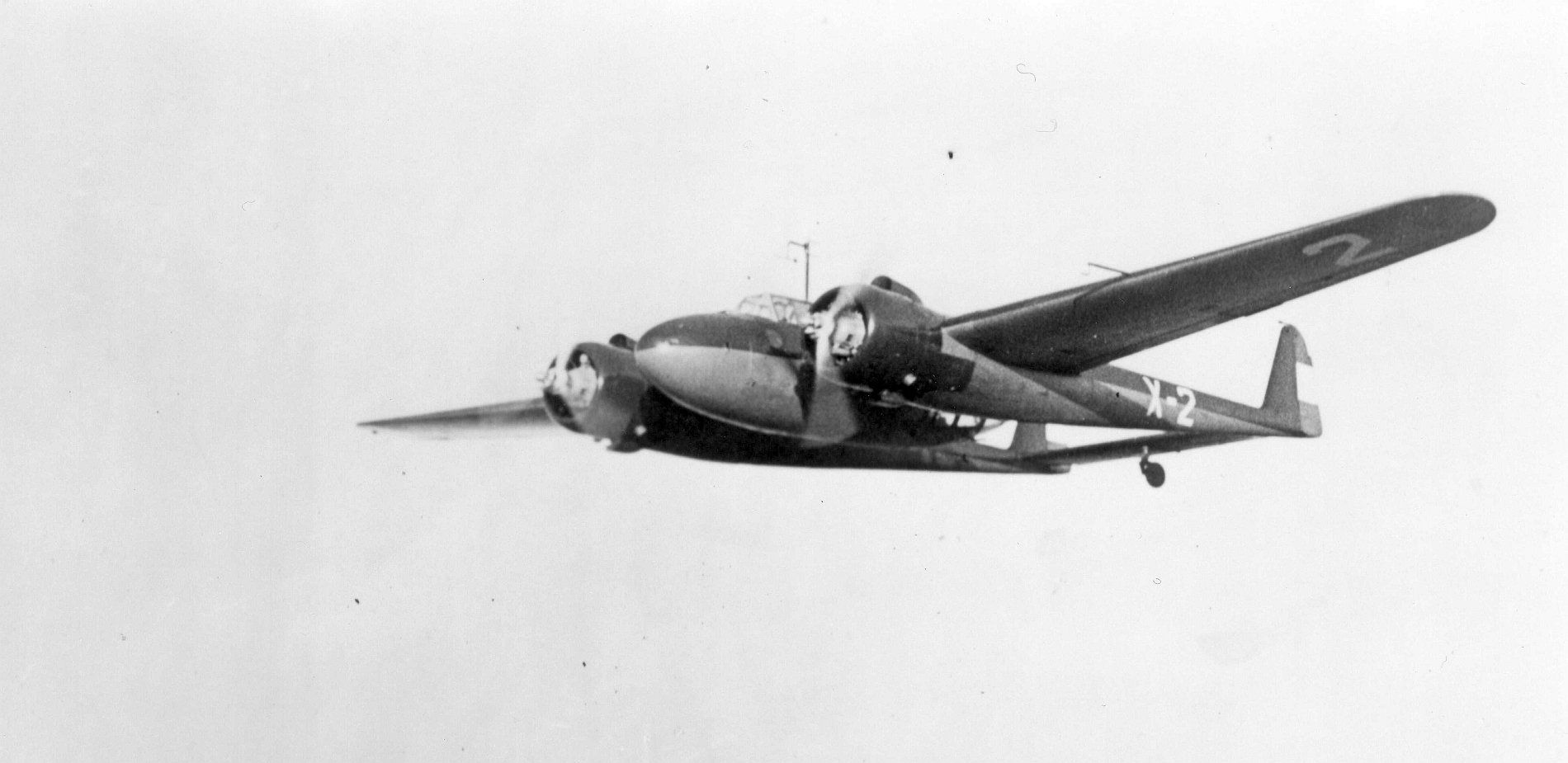
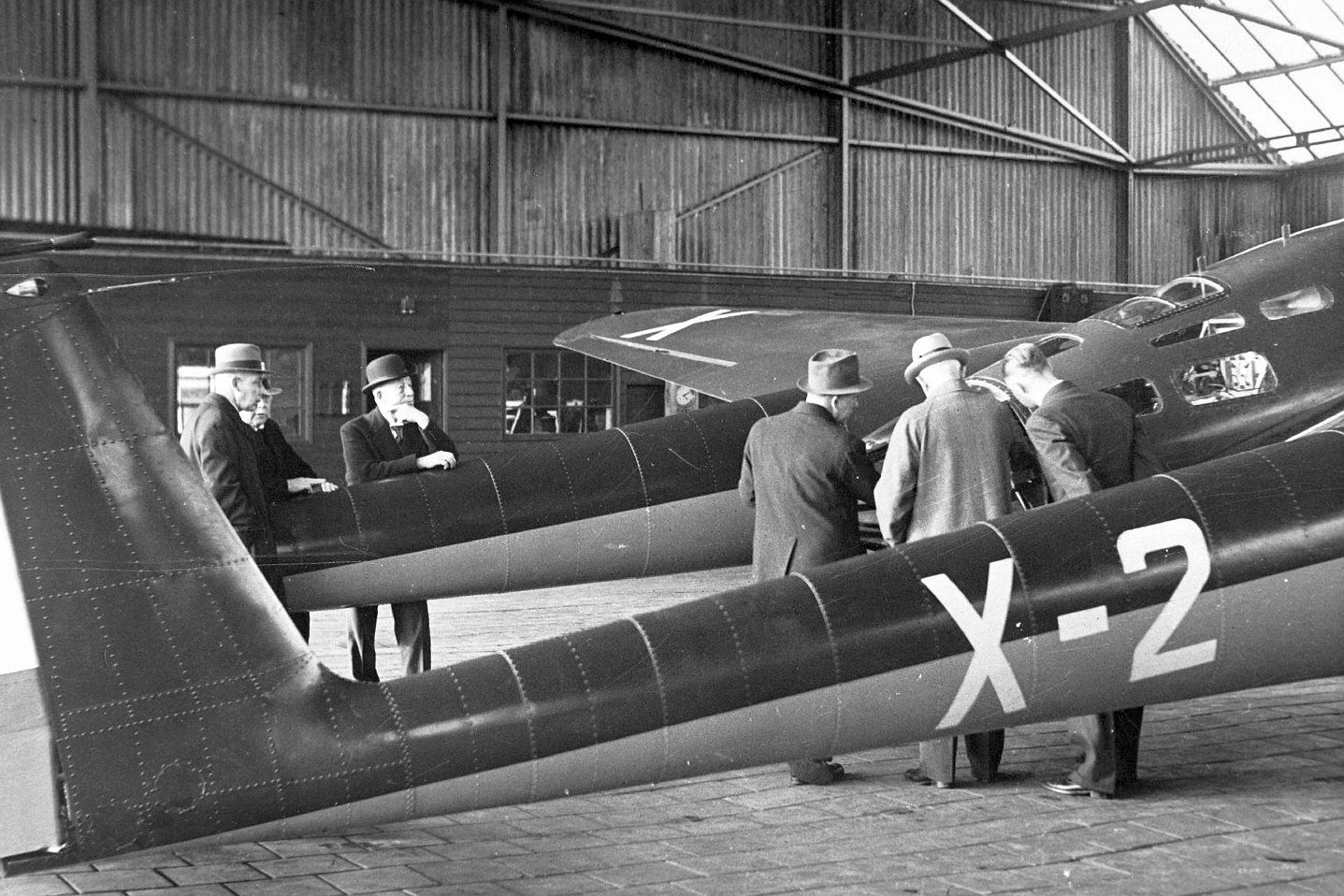
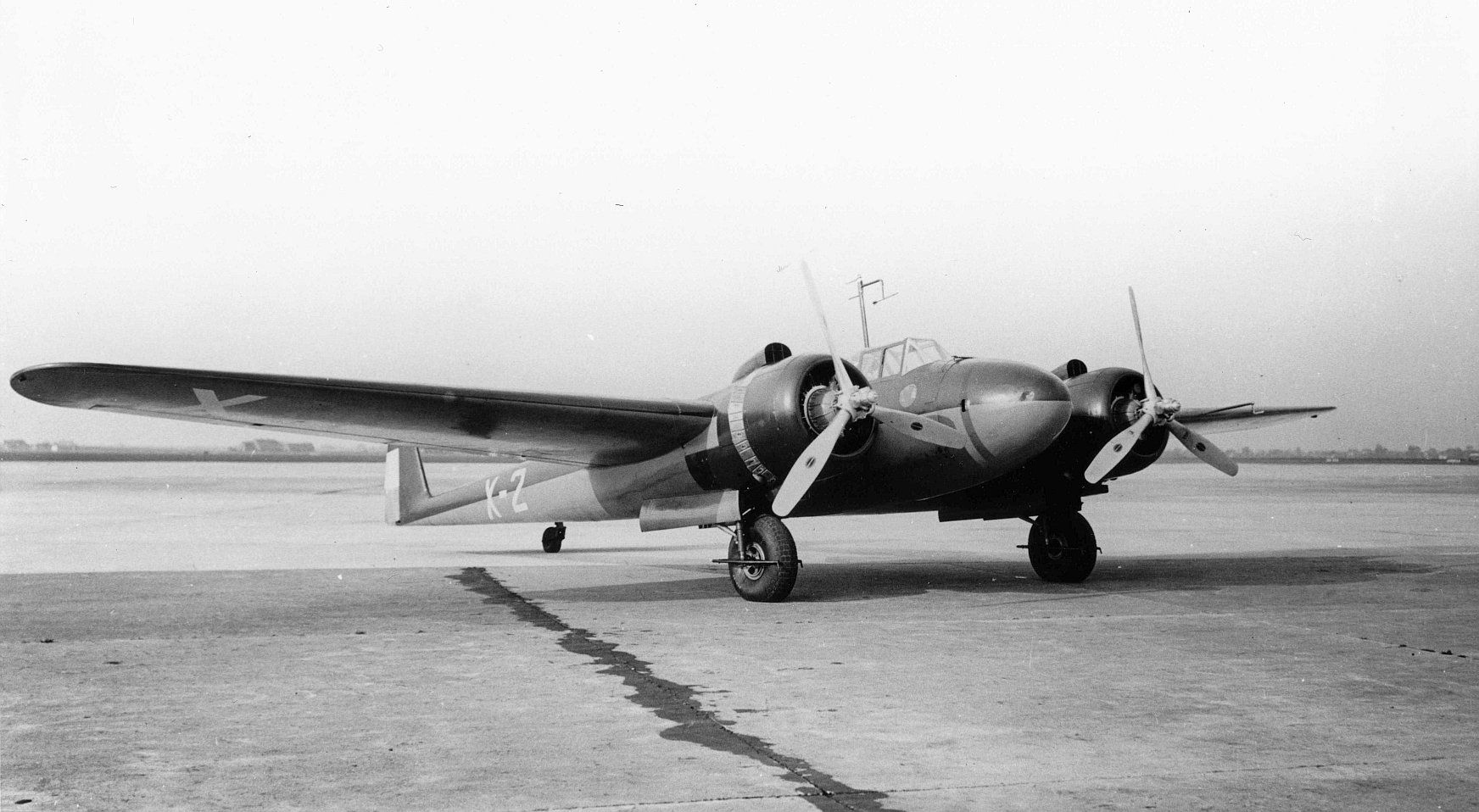
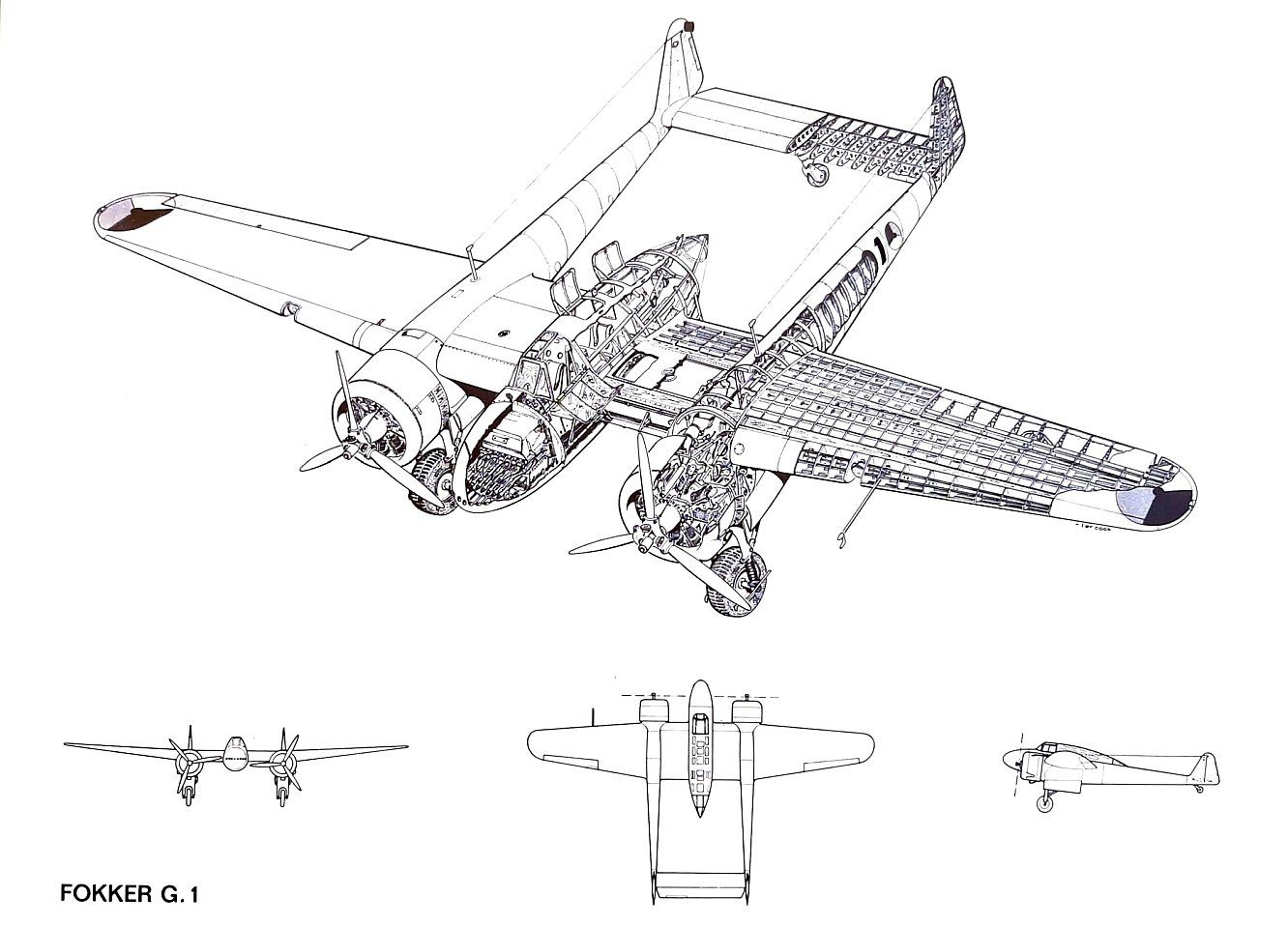
And that recognisability is always great and surprising due to the double tail boom.
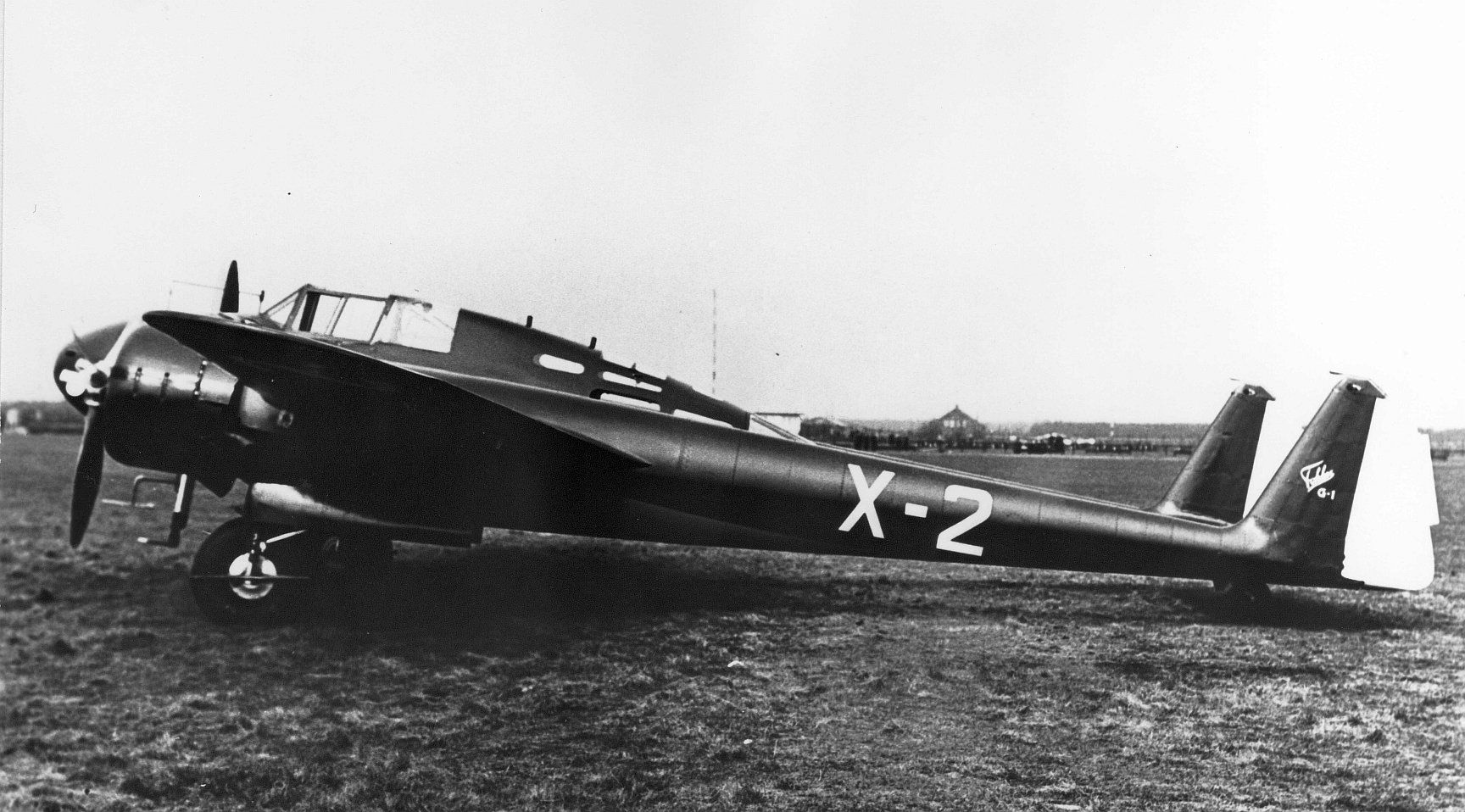
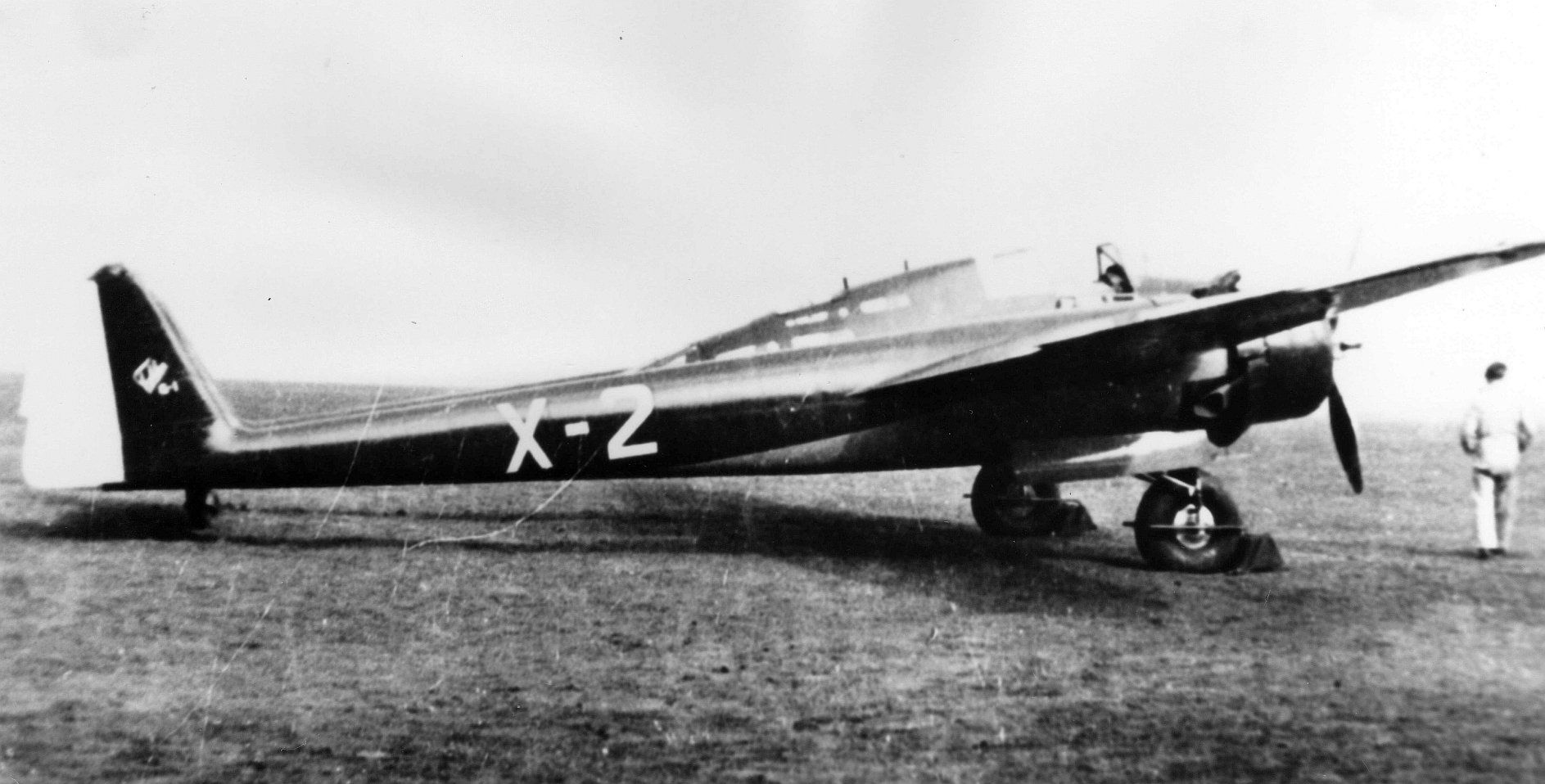
At Fokker the G.1 was given the X-2 designation after all these tests.
The engines initially used were the 750 hp Hispano-Suiza.
Soon after, the Pratt and Whitney Twin Wasp engines of 750 hp followed, which met the requirements better.
One thing is for sure it is a very popular beautiful and ruthless yacht cruiser.
Extremely deployable on many missions.
Click on the photo to enlarge the photo
-
0
The prototype of the G.1, a twin-engine attack aircraft with two distinctive tail drags, caused a great sensation at the Paris Air Show in 1936. In terms of concept, this type was highly revolutionary due to its construction and its powerful frontal armament, which could consist of two 23 mm Madsen cannons and two machine guns, four Oerlikon cannons, or as many as eight synchronized machine guns. Before the war, the G.1 was therefore nicknamed "the mower." The prototype (reg. X-2, later military number 341) was first test flown on March 16, 1937, at Welschap near Eindhoven. At that time, it was equipped with two brand-new Hispano-Suiza 80-02 radial engines, which rotated in opposite directions! A principle later adopted by the Lockheed Lightning. Because serious problems arose with these prototype engines, they were replaced by the Pratt & Whitney Twin Wasp (G.1 B). A larger, three-passenger version, the G.1 A, was developed for the LVA, equipped with two 830 hp Bristol Mercury VIII radial engines. Thirty-six of these were built for the Aviation Department. This type carried eight synchronized machine guns in the nose and a rotating machine gun in the conical tail turret. The LVA G.1 A series had registration numbers 301-336. Many air forces showed interest in this formidable attack and fighter aircraft. Republican Spain secretly ordered twelve G.1 Bs, which were never delivered due to the Dutch government's arms embargo. They were, however, paid for, as was an order from Estonia (also for Spain). Contracts were signed with Sweden, Finland, and Denmark for the delivery of 18 and 26 C.1 B aircraft respectively, and in Denmark for license production at the state-owned factory in Klovermarken. It is unknown that Hungary also ordered the G.1 for license production by Manfred Weiss in Budapest. A series of 26 G.1 B aircraft, originally intended for export, were taken over by the Dutch government before the outbreak of war. Upon the German invasion, a number of completed G.1s were set on fire by the Dutch army, while the 16 aircraft still under construction at Fokker were confiscated by the Germans and used as "Zerstorer-Uebungsflugzeug" (firefighting equipment) near Vienna. One G.1 escaped to England with Fokker's chief pilot Hidde Leegstra and Fokker Director P.J.C. Vos during a "test flight" from Schiphol Airport on May 5, 1941.Button -
01
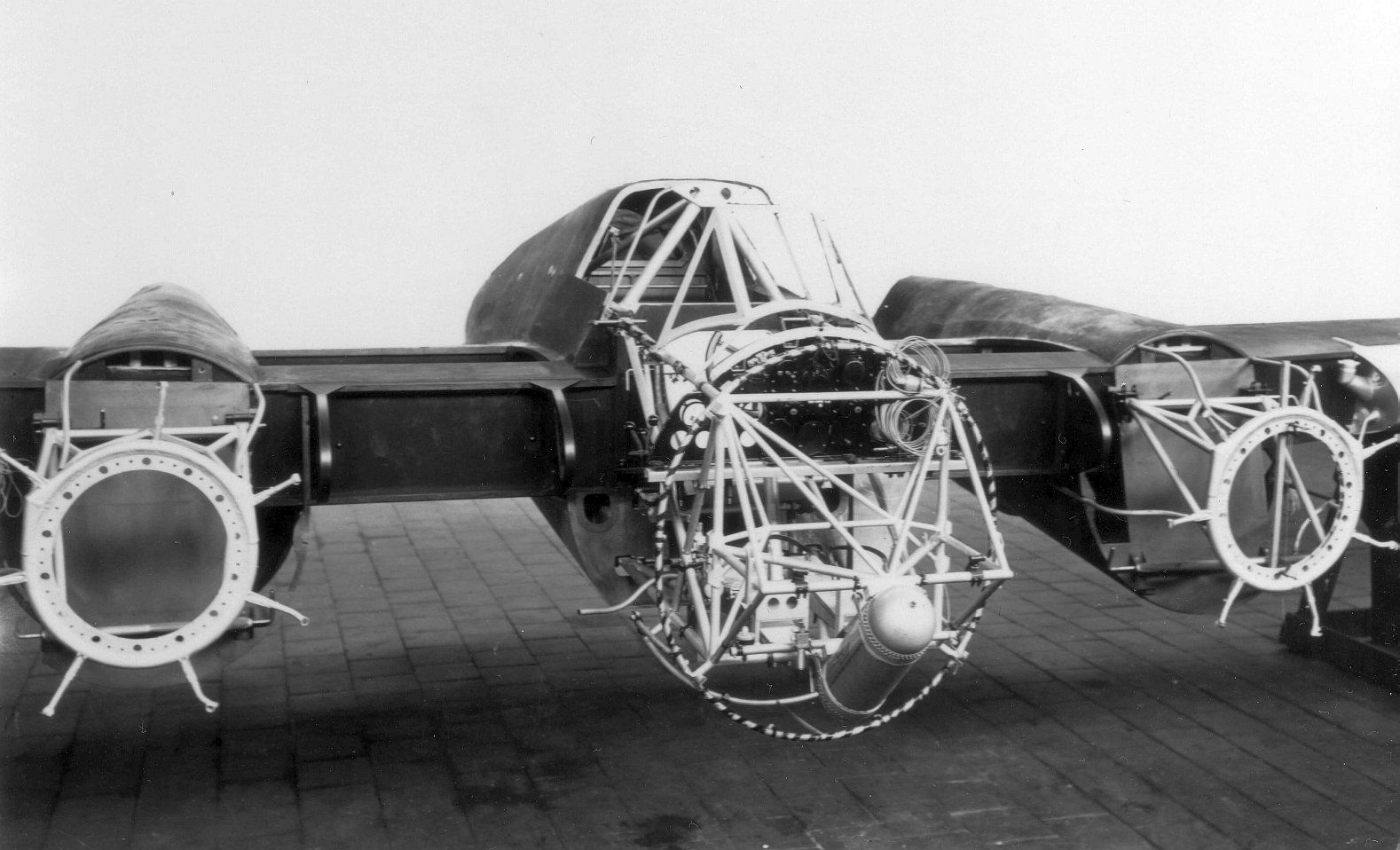
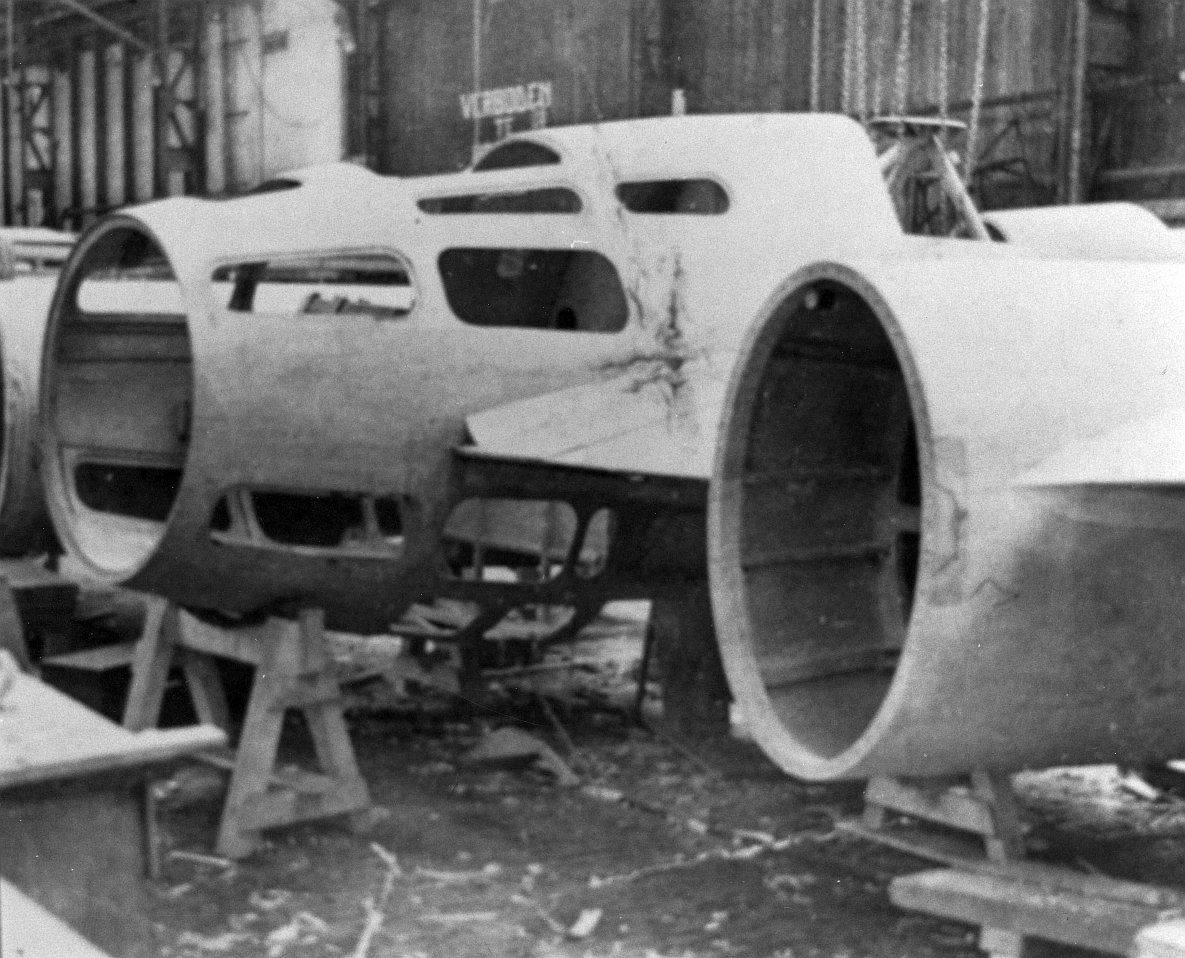
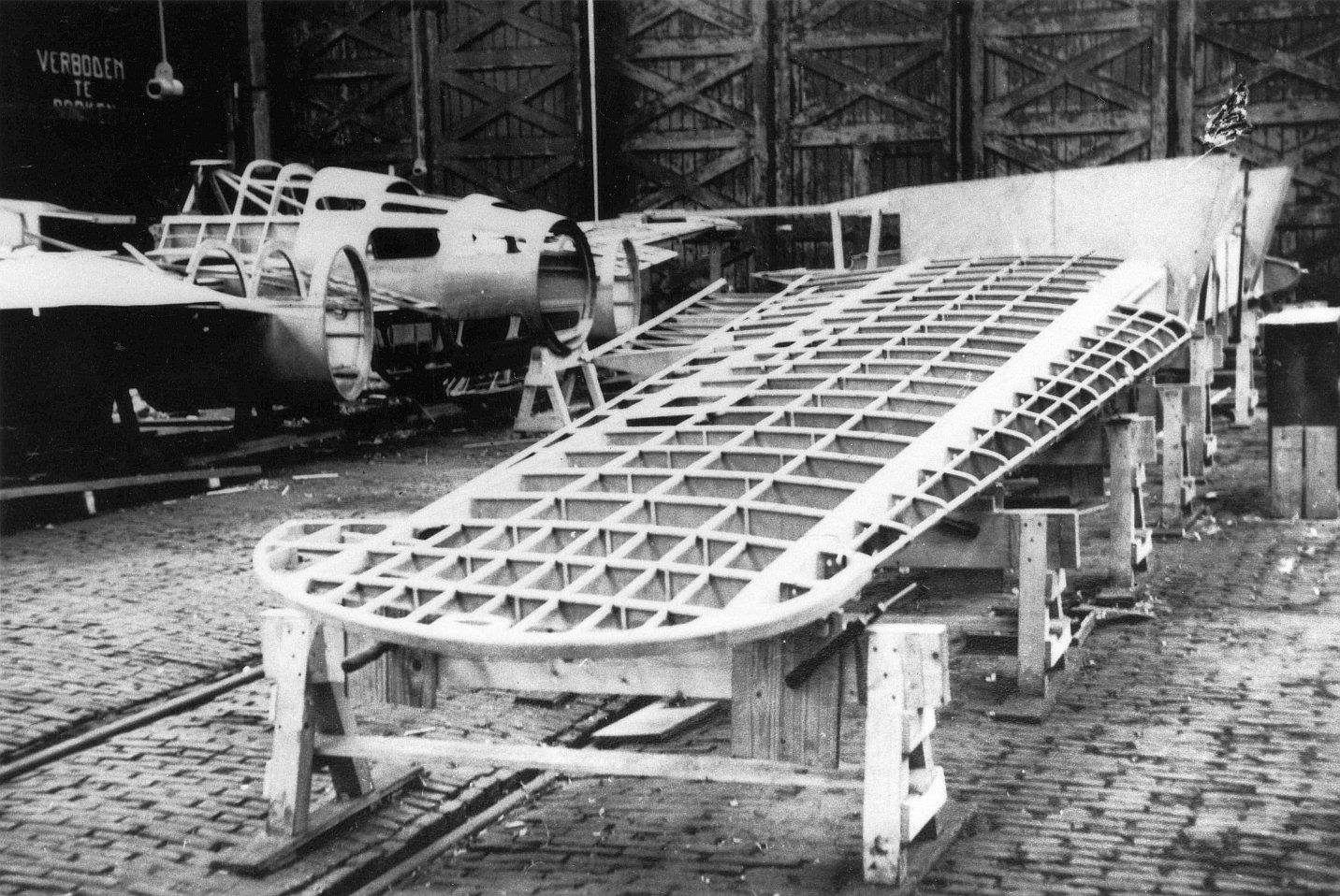
Between 1935 and 1936, after the design phase of the G.1, the construction of the mock-up or superstructure followed. Time was running out and so the construction of the prototype soon followed, with the registration X-2. The format was initially set to be the slightly smaller version, later called the G.1B. The fuselage shape, wings and the beginnings of the two tail booms are clearly visible. In any case, the Fokker factory managed to keep the aircraft a well-secret secret until the Paris Motor Show. This also included the early installation of the instrument panel and the mounting structure for the engines.Button -
05.1
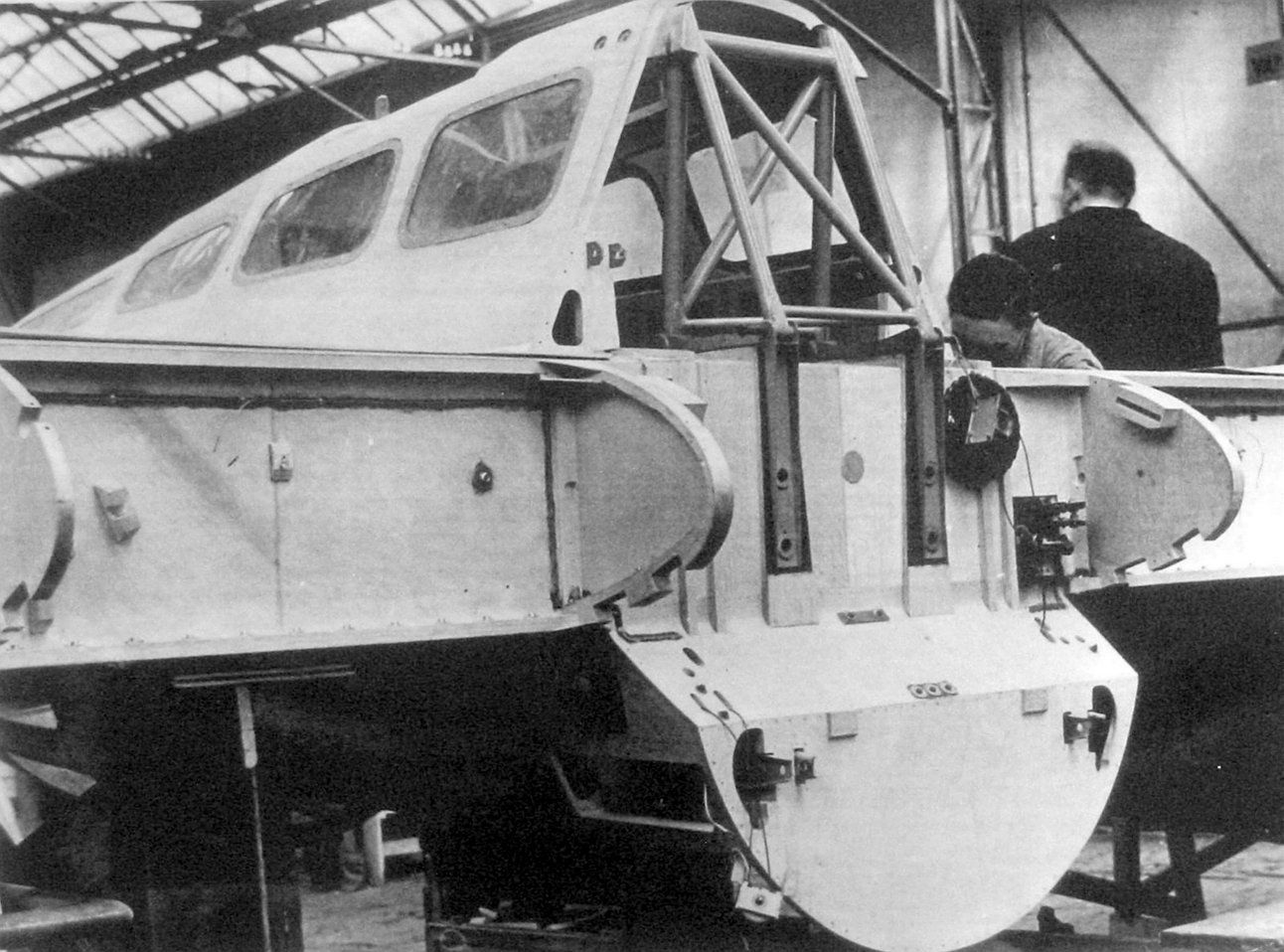
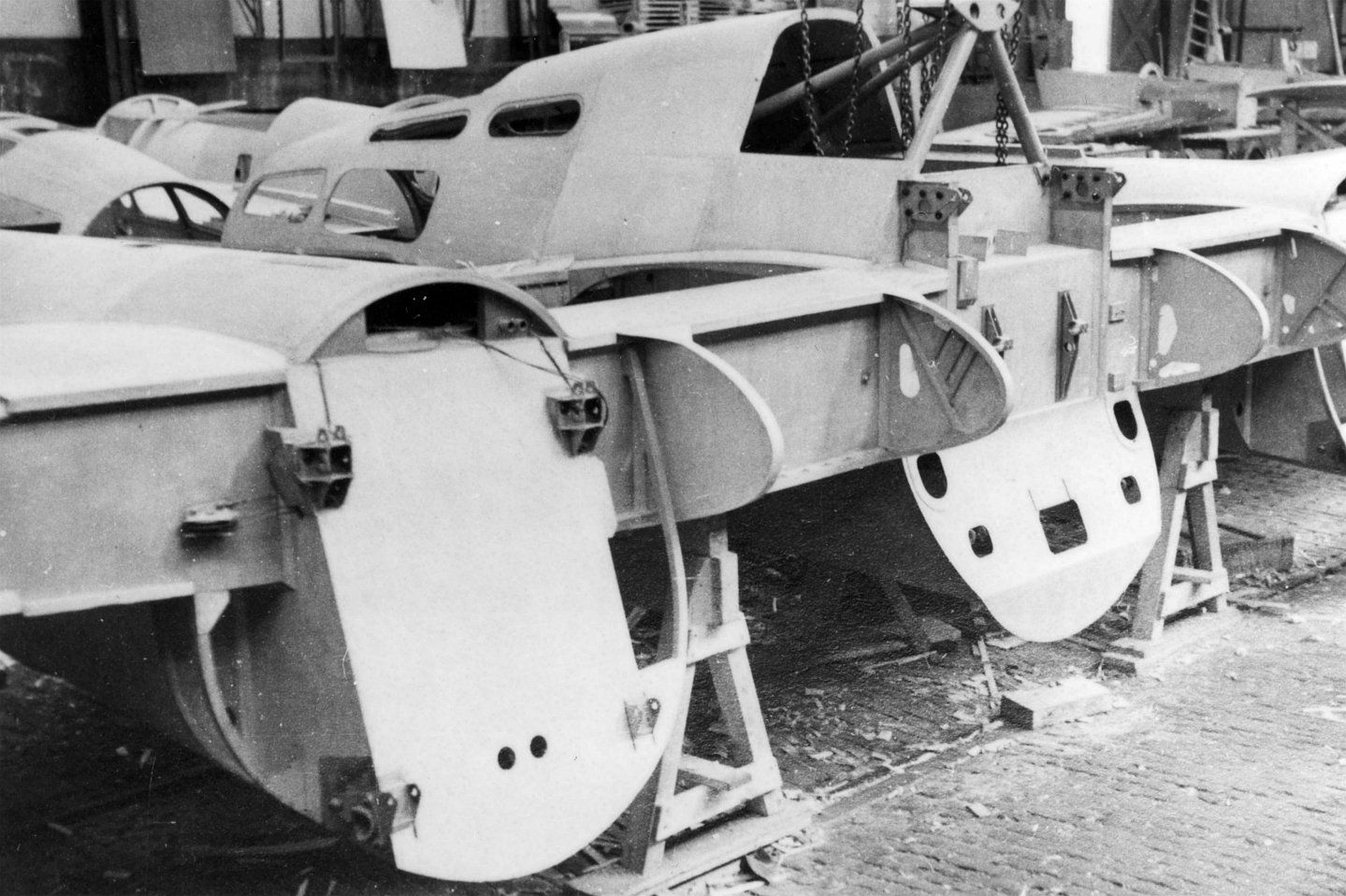
A major leap forward in the construction process. At the front, we see the construction of the wings, and a little further on, the wing coverings. Behind that, the fuselage construction, clearly showing the aircraft's many windows. The windows would provide additional assistance to the second crew member in observing up and down, left and right. Many people are back at work. Fokker is flourishing again!Button -
06
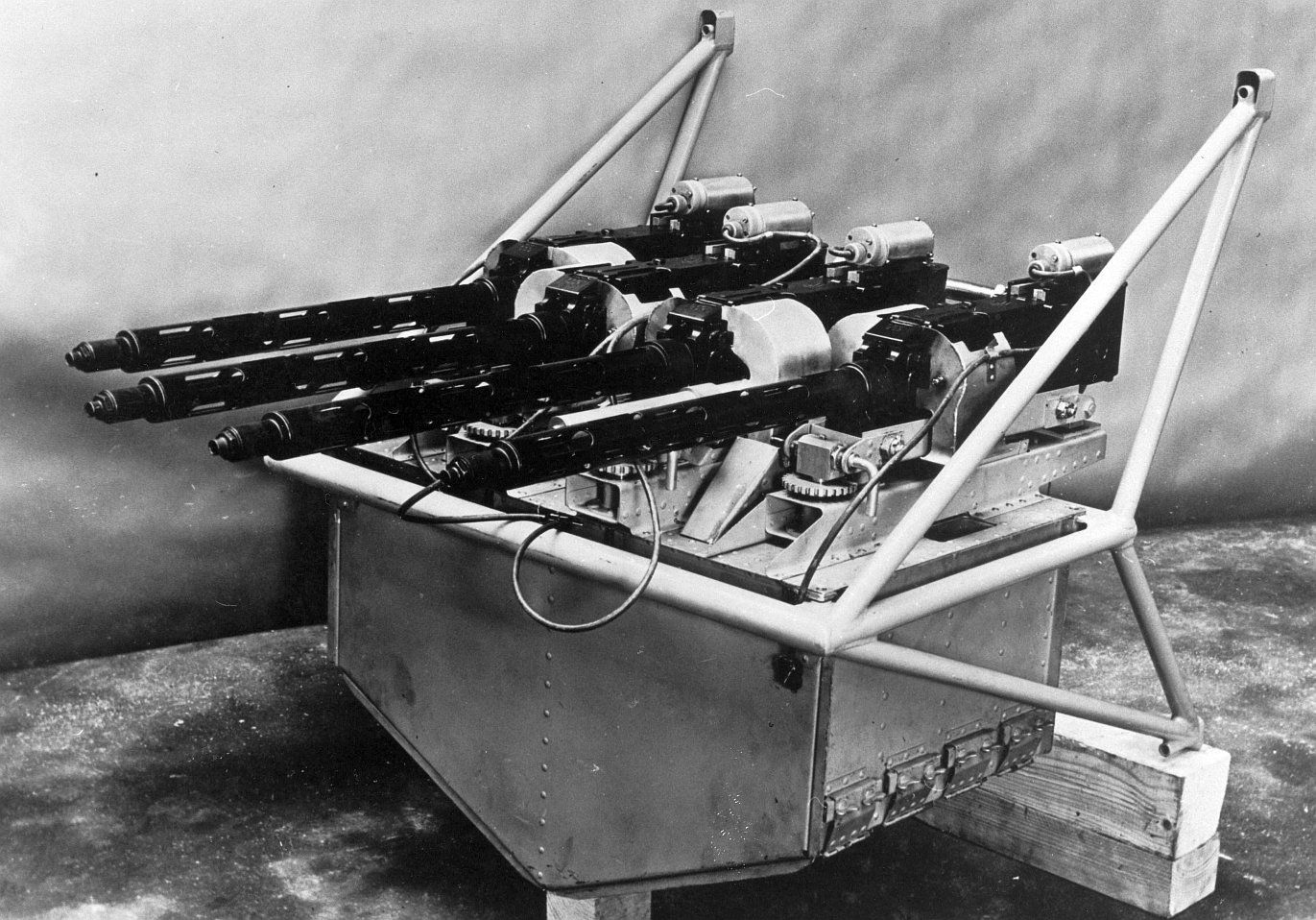
Test setup of four of the eight fixed 7.9mm machine guns. For the G.1A, to be delivered to the LVA later, this will increase to eight machine guns. The rear turret also houses a movable 7.9mm machine gun for the tail gunner. There's also room to carry two Danish 23mm Madsen cannons. And if that's not enough, it can also carry bombs weighing up to 400 kg.Button -
07
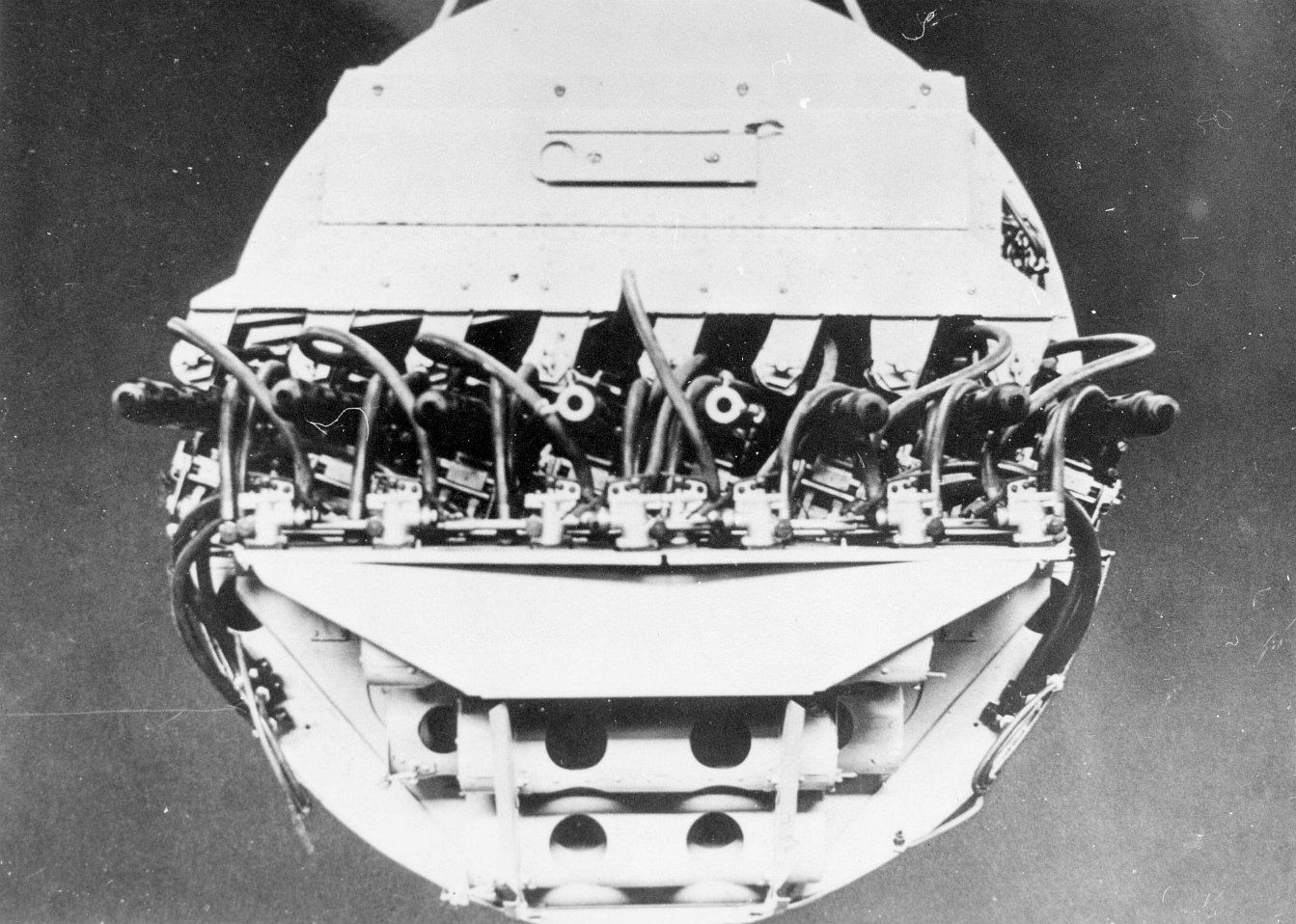
And here is the 8-machine gun version, specifically designed for the G.1A. All in all, a devastating fighter cruiser that is also attracting interest abroad.Button -
08
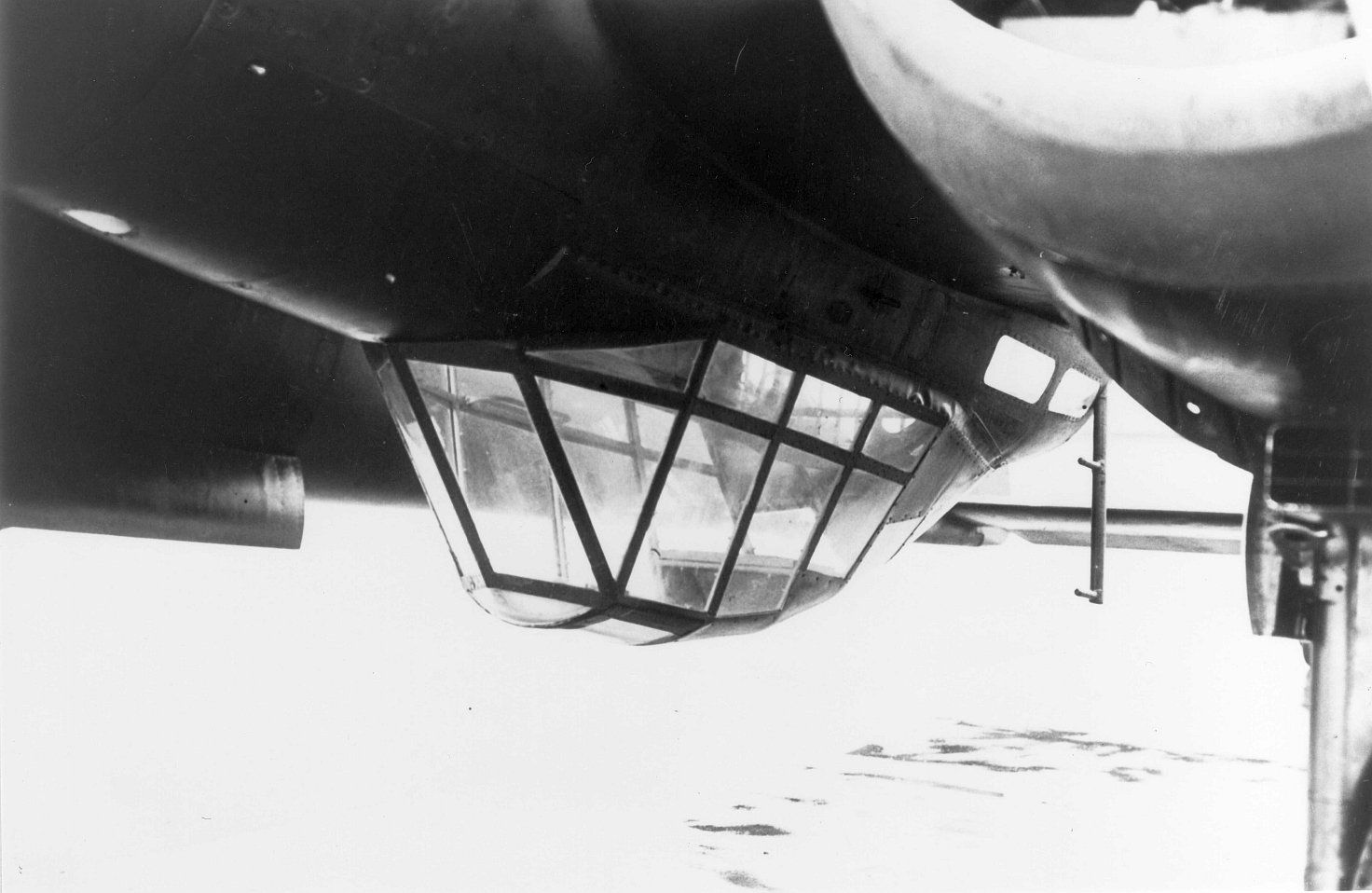
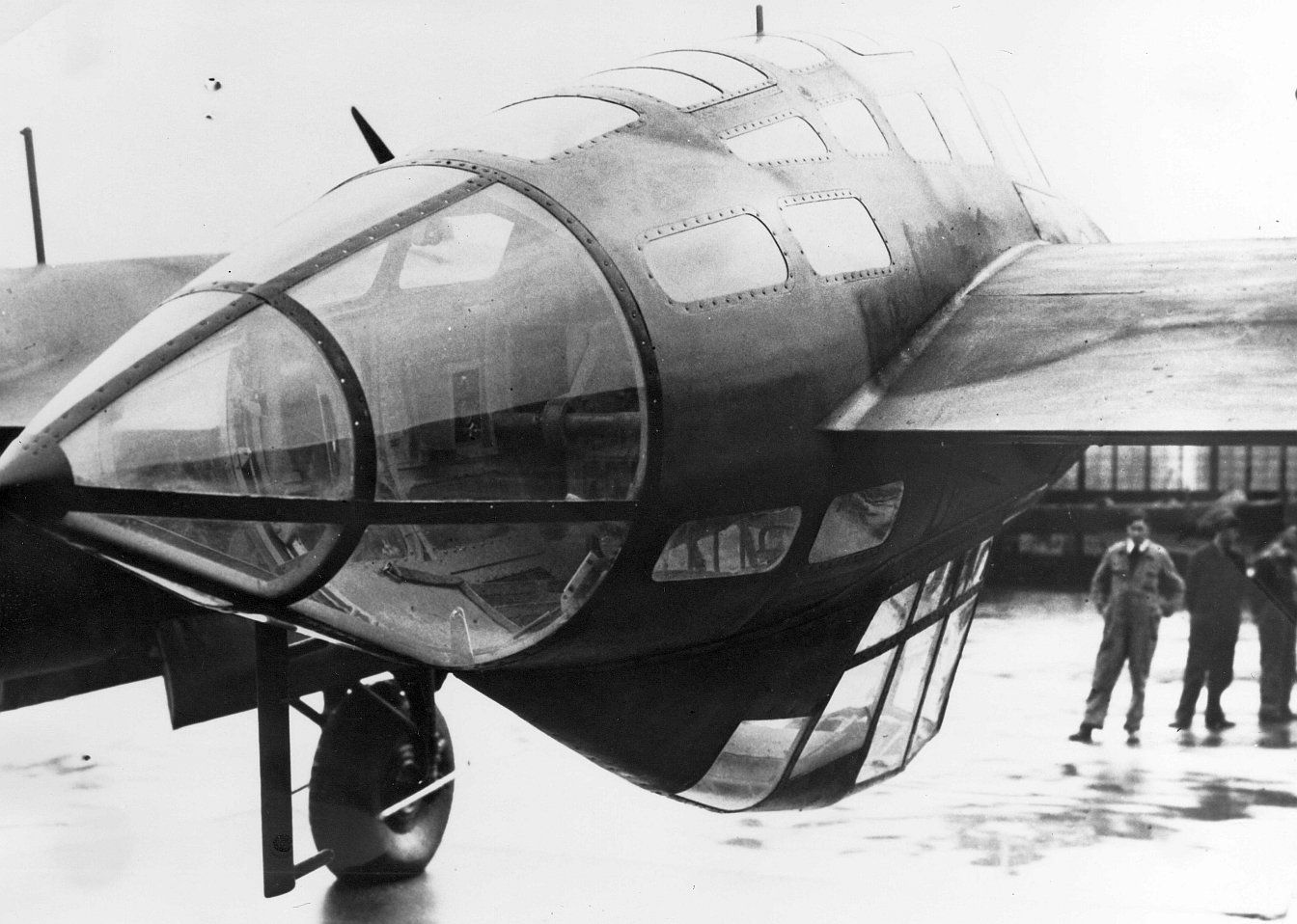
As a test, an observation dome has been mounted on the underside of the G.1's fuselage. Consideration is being given to adding an additional machine gun and an observer's position for the bombardier. The conclusion is that this would lead to an overabundance of options. Therefore, this "bathtub dome," as it will be called, will no longer be offered. After all, in practice, a three-man crew will be more than sufficient, and in practice, two will be enough.Button -
09
This photo clearly shows that the rear turret already provides sufficient field of fire. It's not so easy for the tail gunner to avoid hitting the tail booms and the elevator. If a radio operator/observer isn't taken along, the extra fuel supply is in its place.Button -
10
The first build, from the fuselage forward. It's clearly visible that the wings connect very naturally to the tail booms.Button -
11
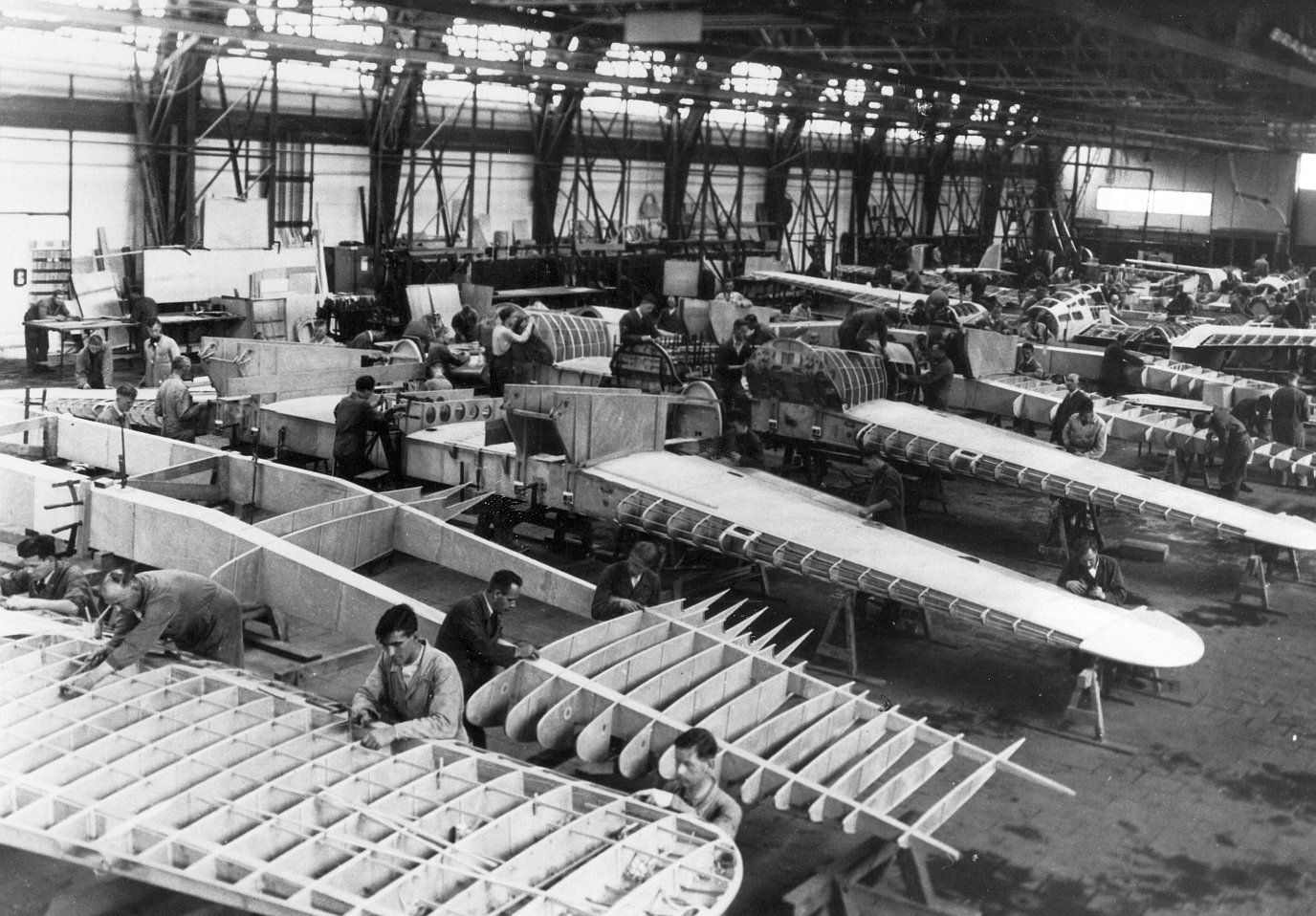
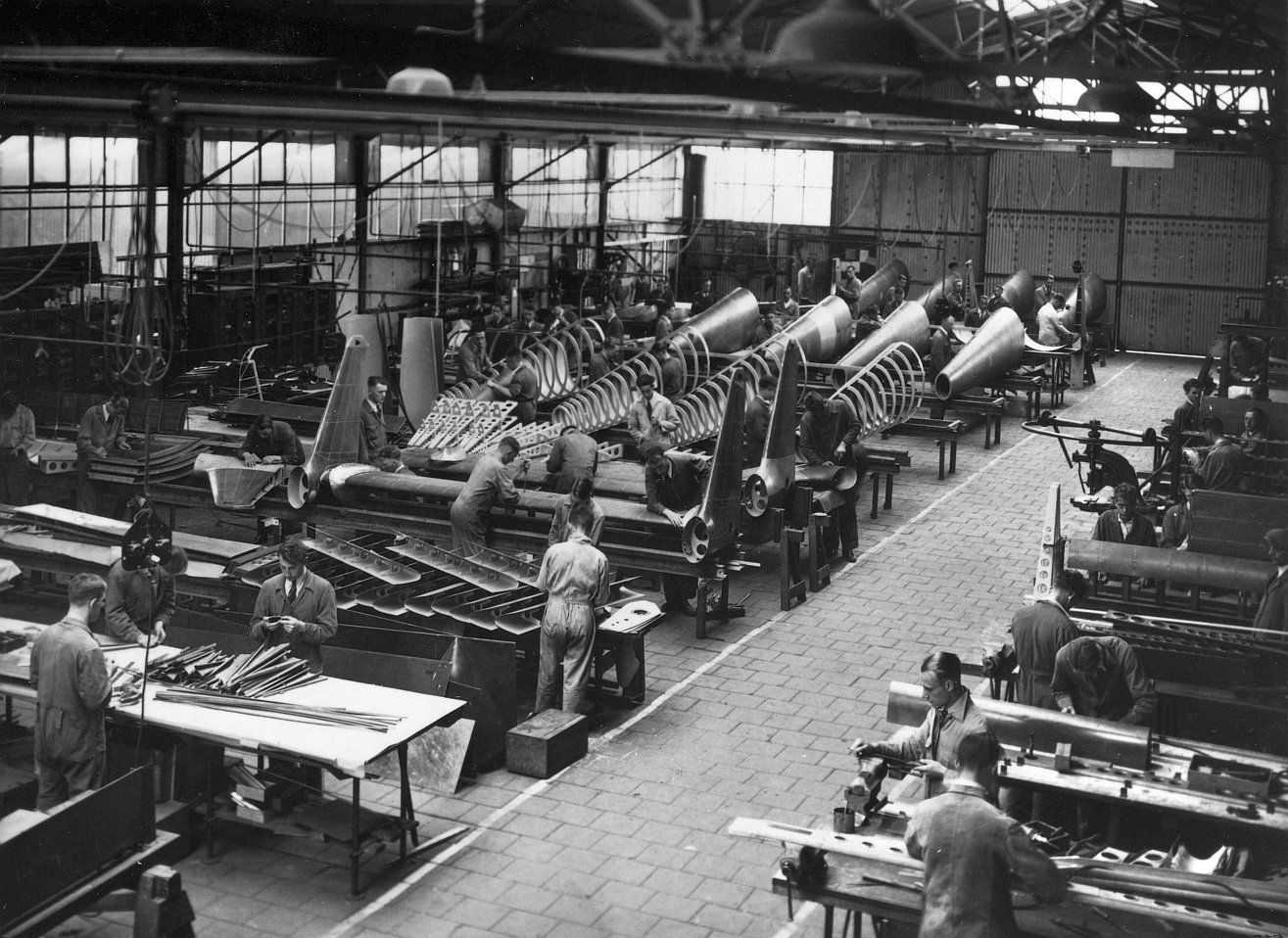
A good view of the well-organized Amsterdam Fokker factory, which is enjoying a steady stream of orders. At the front, the aft section is being assembled with the tailplanes. This is actually the most distinctive part of the G.1. At the rear, work is underway on the tail booms, which connect to the engine nacelles via the wing.Button -
12
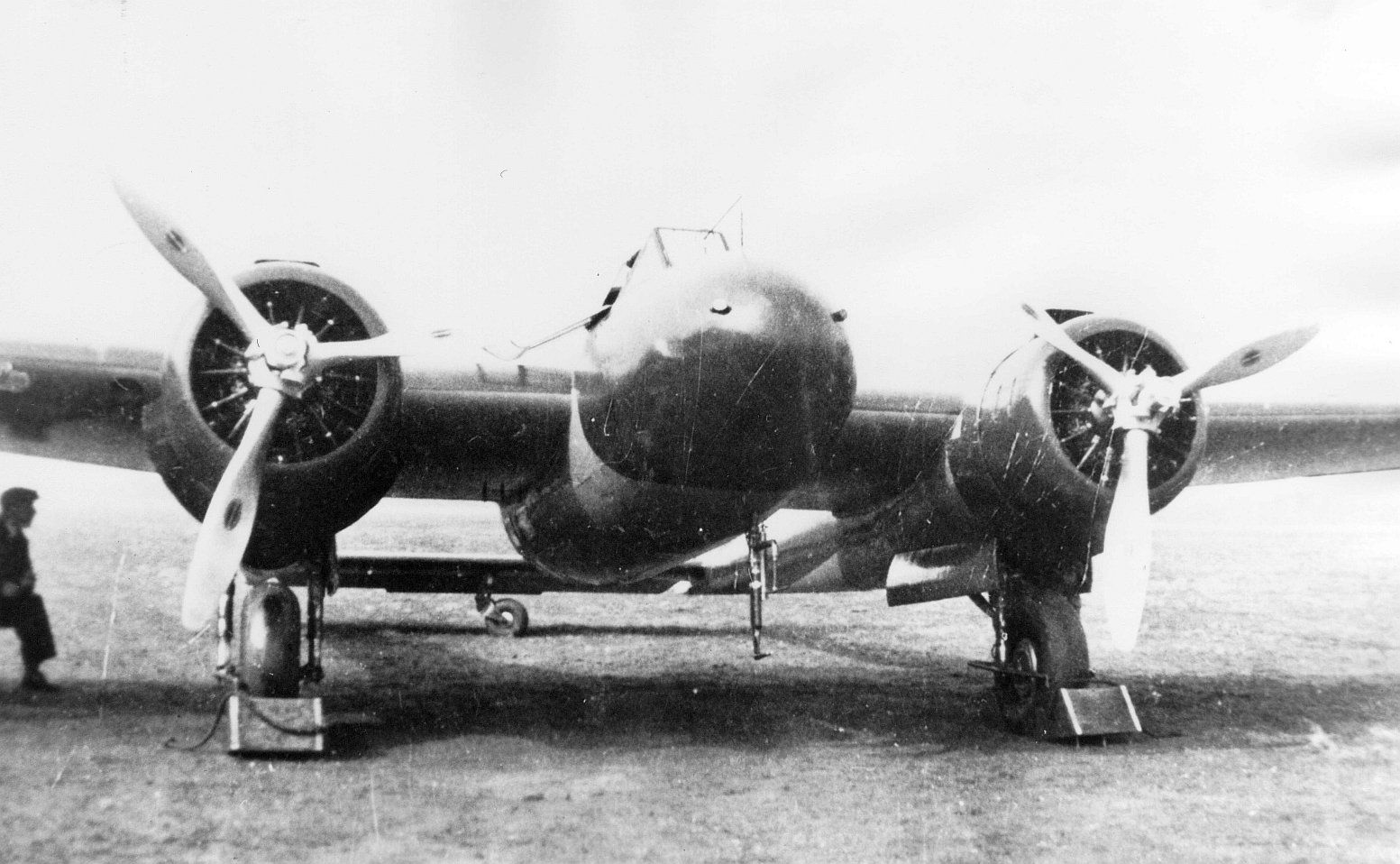
A good view of the front of the cruiser. The forward section of the cockpit and the nose with the positions for the machine guns or cannons. The engine nacelles are also visible on the left and right.Button -
13
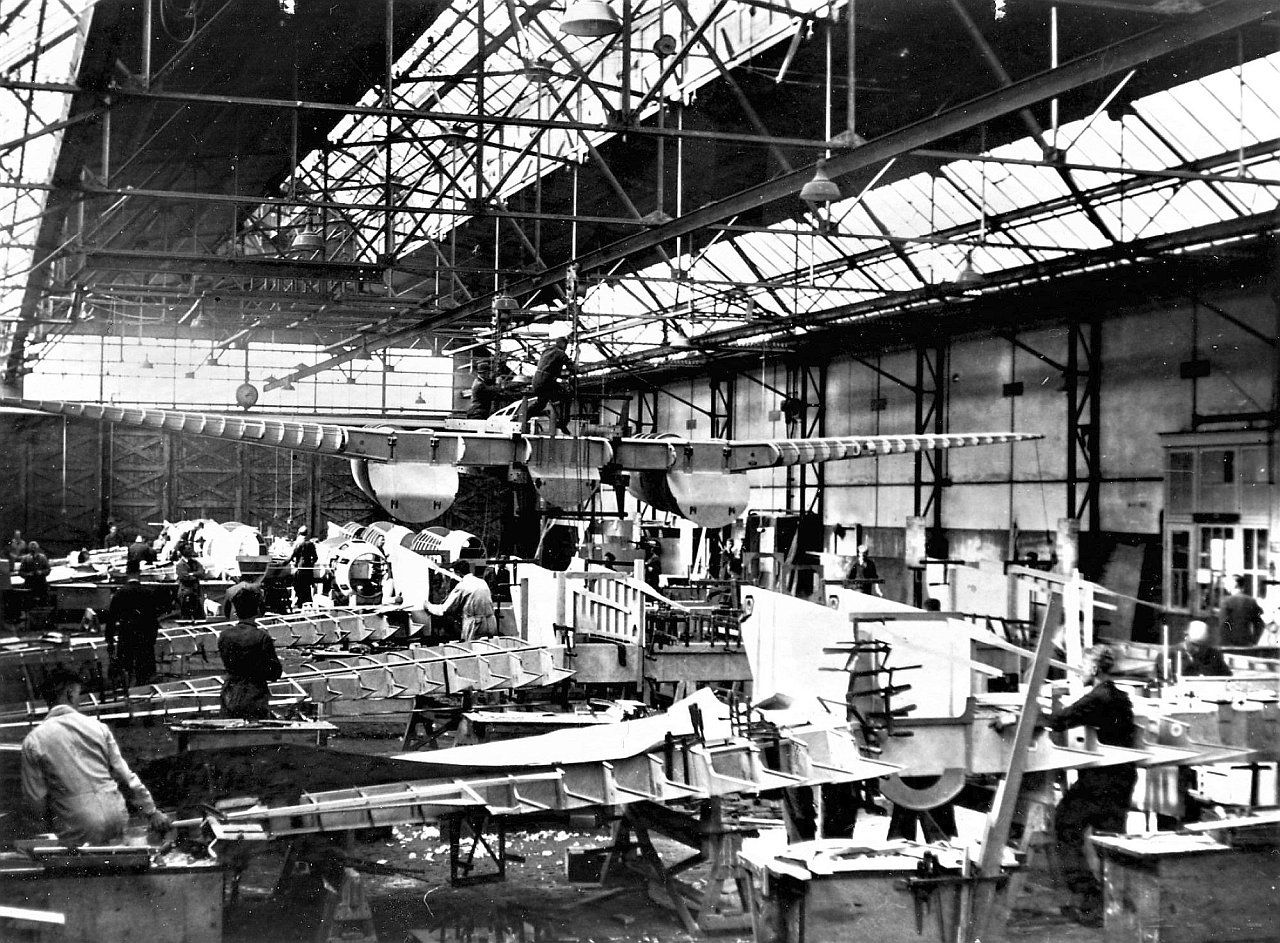
In the next stage of construction, we see the benefits of the fuselage. And then there's the machine gun turret, the cockpit, the Moror gondolas, and the wings.Button -
14
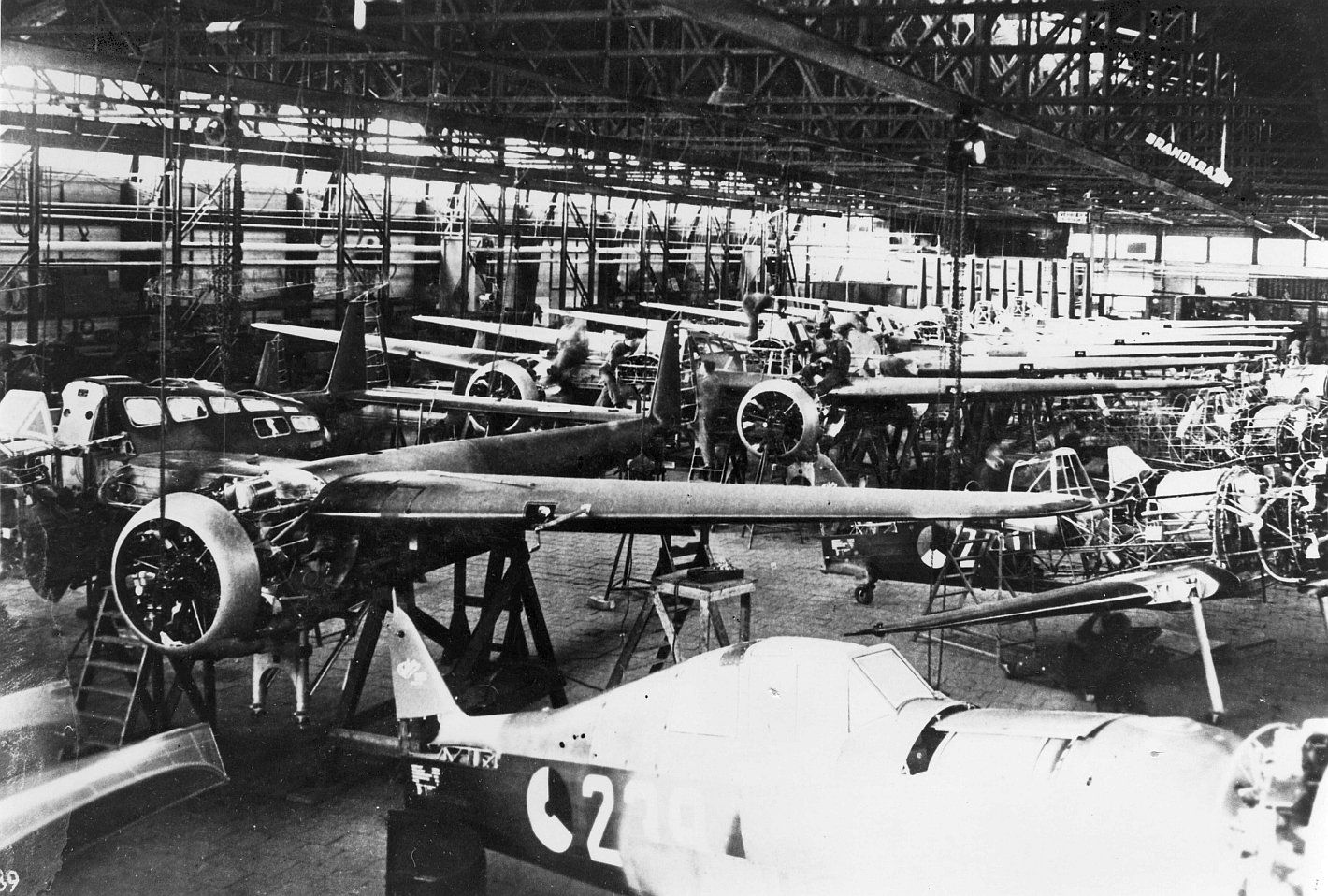
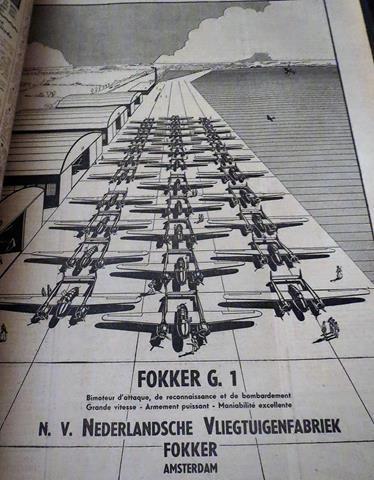
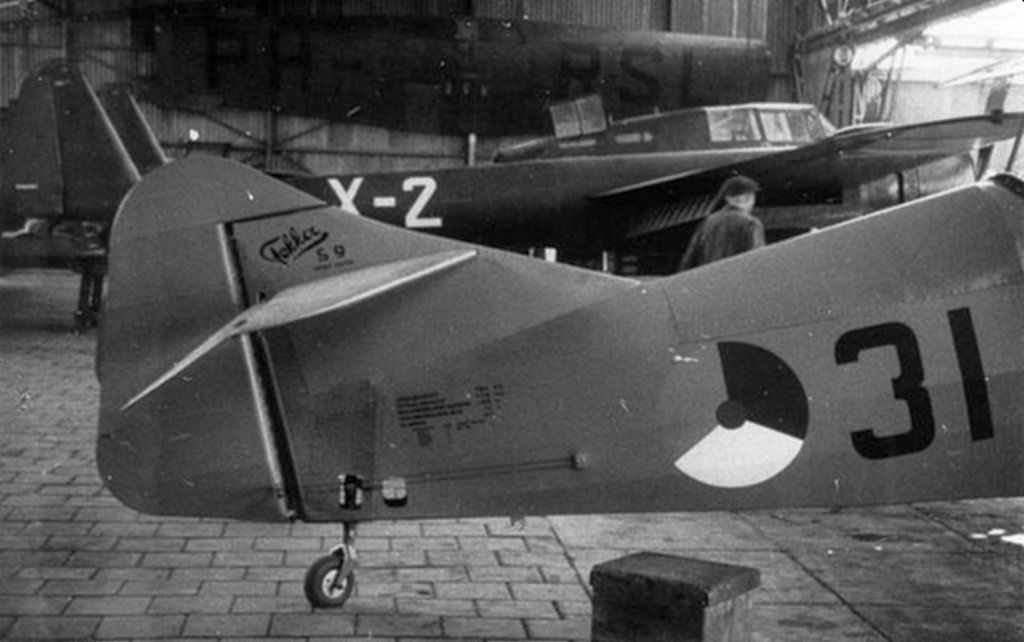
It's incredibly busy in one of Fokker's Amsterdam halls. During the period 1937-1938, production numbers created American-style situations. From the BRANDTON in the early 1920s to the BRAND HYDRAULIC in the late 1930s (right in the photo). From front to back, the G.1s are under construction and in various stages of development. Incidentally, this is one of the very few photos showing so many aircraft simultaneously. On the right, work is also underway on the Fokker D.XXI, whose registrations begin with a 2. The D.XXI and the G.1 would enter the May 1940 period as contemporaries.Button -
14.1
Button -
15
Front to rear: the midsection of the G.1. The cockpit structure, engine nacelles, and fuselage extension are visible.Button -
16
November 1936, Paris, the Air Show. The grand presentation of the prototype (or rather, the mock-up) of the G.1. The aircraft was well received by the international press. The double tail boom attracted attention, as did the numerous armament options. The following photo shows a few of these options.Button -
16.1
Twin-engine attack aircraft. FOKKER G.1 Hispano-Suiza type 80-02 engines, 750 hp. Armament: 2 fixed "Madsen" cannons, 23 mm caliber, capacity 400 rounds per minute; 2 fixed "Madsen" machine guns, 7.9 mm caliber, capacity 1200 rounds per minute. 1 7.9 mm machine gun in the rotating propeller shaft, capacity 1200 rounds per minute. SPEED: 470 KM/HButton -
16.2
Button -
17
Once again, the 1936 Paris Salon, where the dark plates are now white. It's always good to be at a trade fair or exhibition with a large neighbor. After all, the USSR can certainly be called the Soviet Union.Button -
18
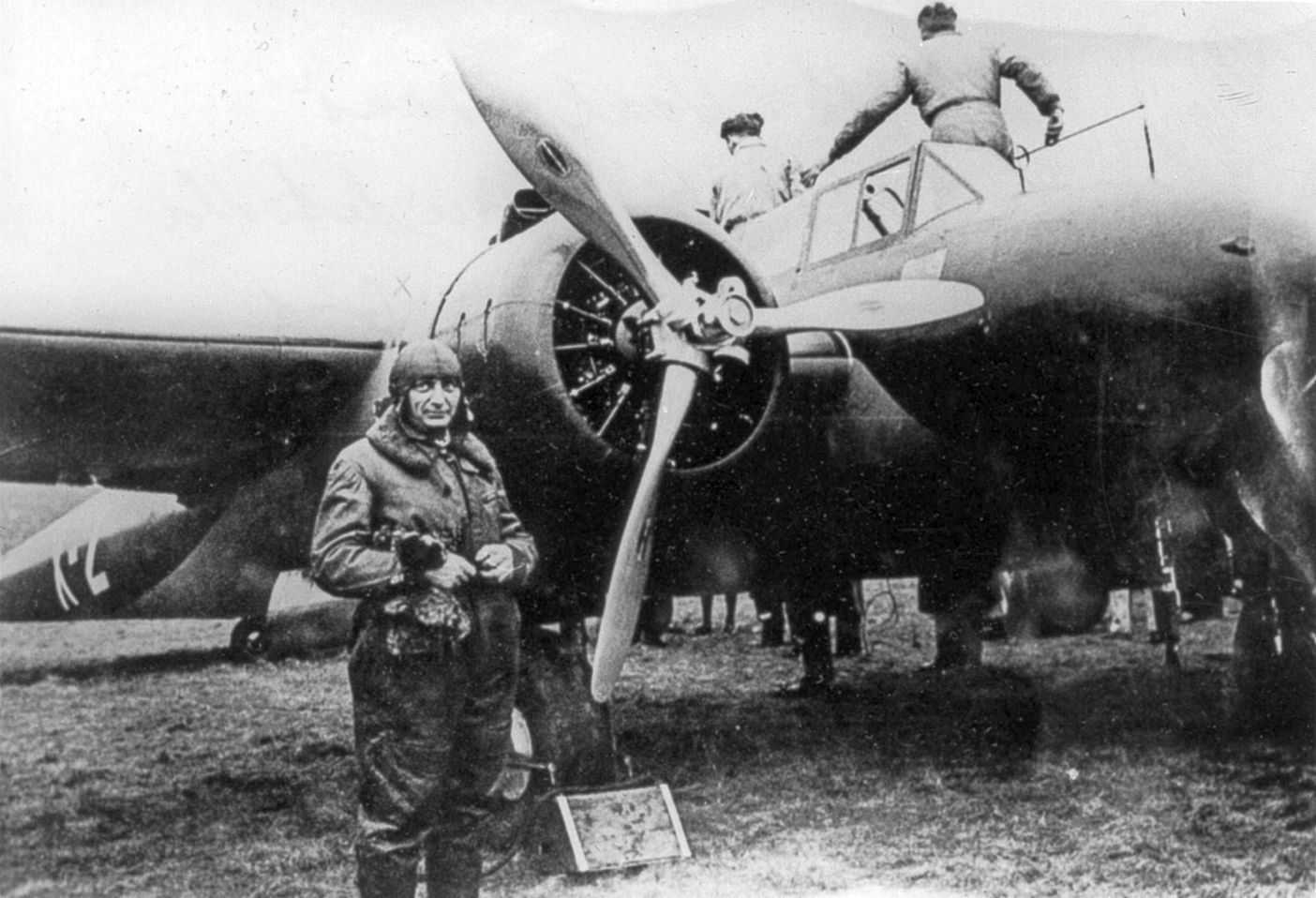
Karel Mareš with the G-1 prototype at Welschap airfield near Eindhoven in March 1937. This unique photo was preserved in the Czech Republic and was discovered and provided in 2020 by Stanislava Moravcová of the Hornické Museum in Příbram. Thank you!Read the story of Karel Mareš -
19
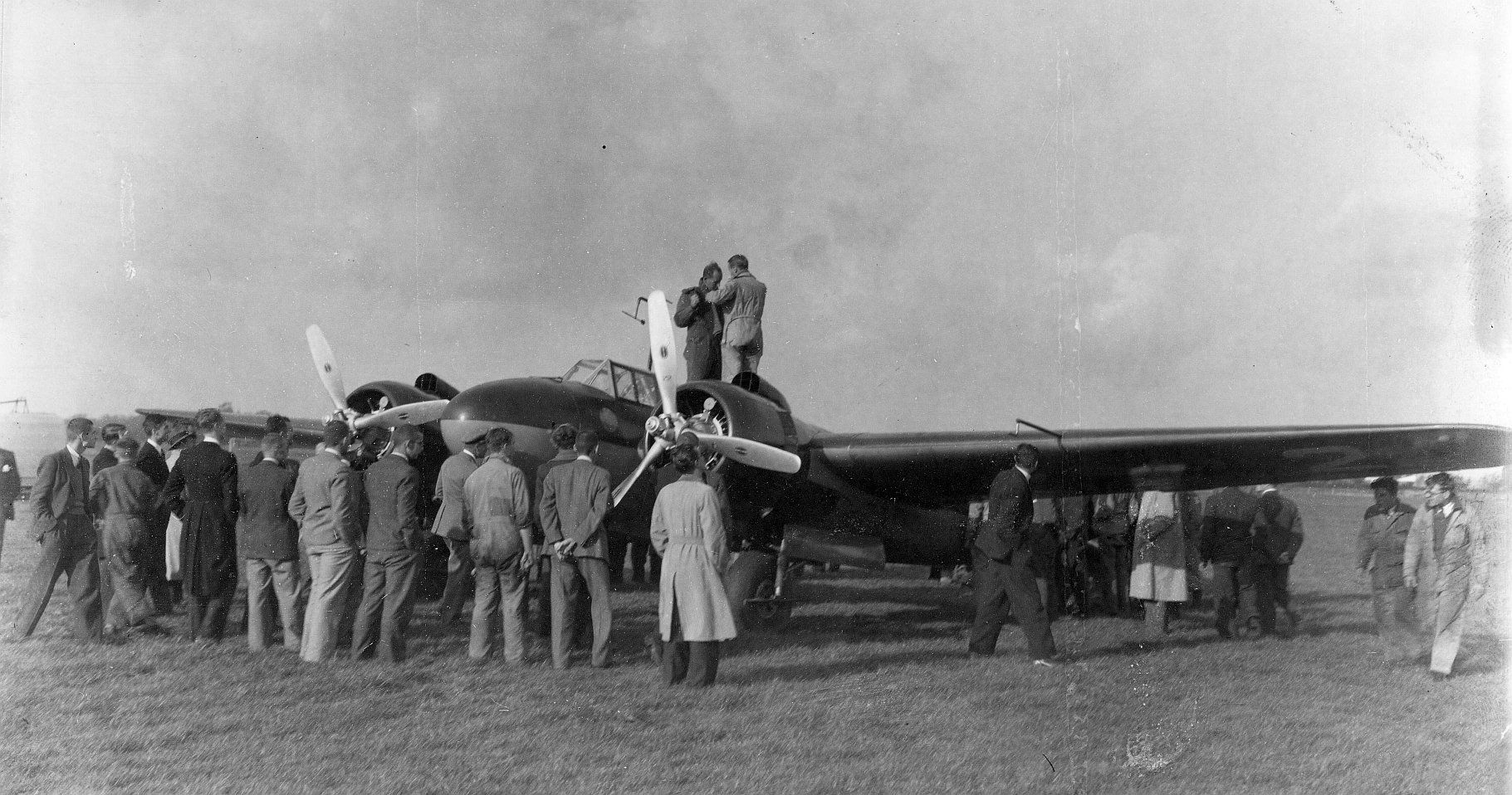
On the left is the young pilot Gerben Sonderman, who also flies for the LVA, ready to board the G.1, which is undergoing a test run with a mechanic in the cockpit. On the right is the slightly older, permanent Fokker pilot Emil Meinecke.Button -
21
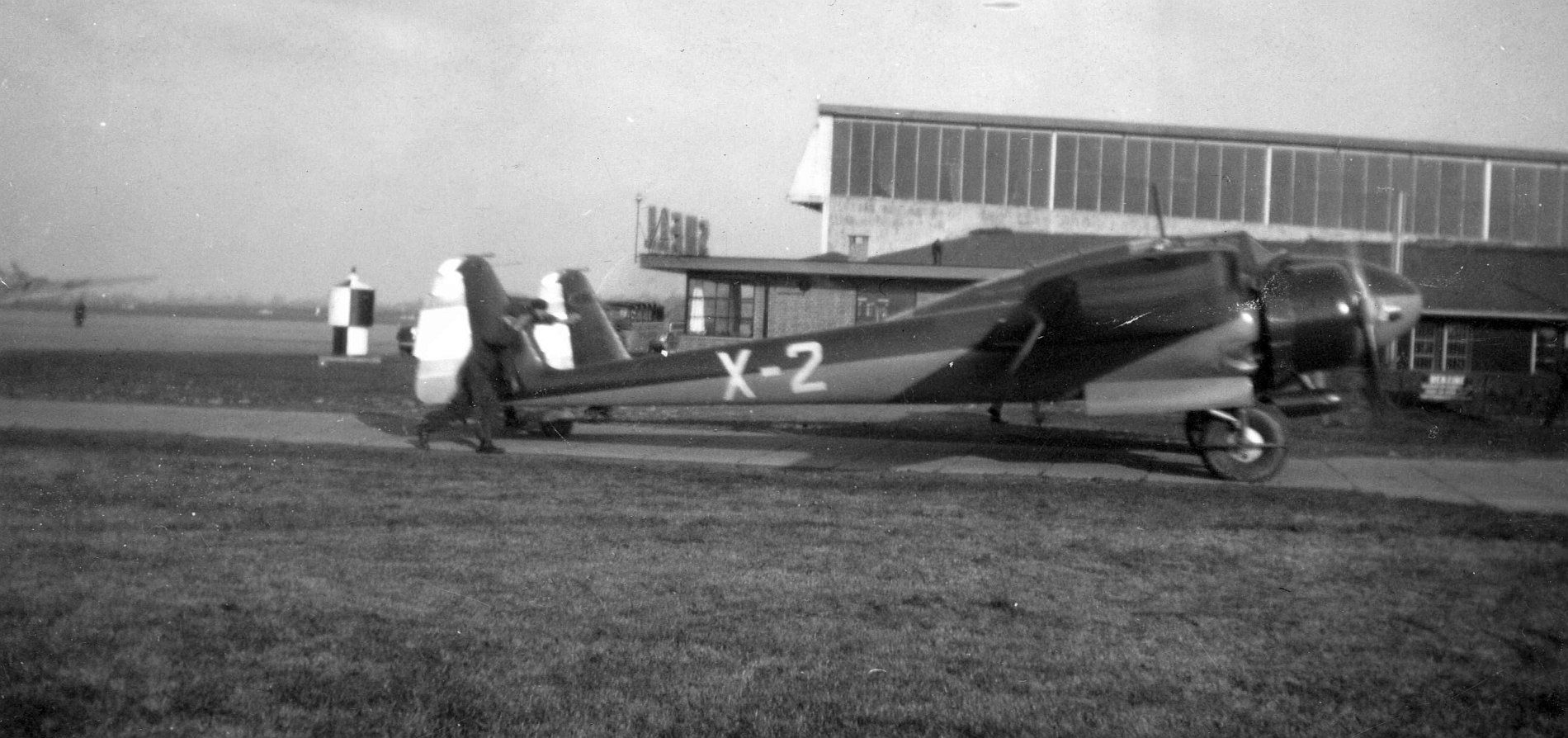
The X-2 returns to the Fokker hangars at Schiphol with its engines still running. Two Fokker mechanics run along with the fighter cruiser to keep the rudders level. This G.1 probably still has 750 hp Hispano-Suiza radial engines. Some basic data are as follows: Wingspan 16.5 m Length 10.3 m. Height 3.3-3.6 m. Wing area 35.7 m2 Empty weight 3250 kg. Flying weight 4400 -4750 kg Max. speed 435 km/h. Cruising speed 364 km/h. Ceiling 9400 m(!) Flight range 1400 km. Flight time 4 hours. Armament 2 X 23 mm Madsen cannon and 2X Browning machine guns 7.9 mm FRONT. REAR 1 movable Browning 7.9 mm. • Later also 4 fixed 7.9 mm machine guns at the FRONT instead of the Madsen cannon.Button -
22
Now stationary on the Fokker platform, overlooking the built-up area of Ringvaart-Haarlemmermeer. At that complex, south of Schiphol Airport, Fokker now has two hangars.Button -
22.1
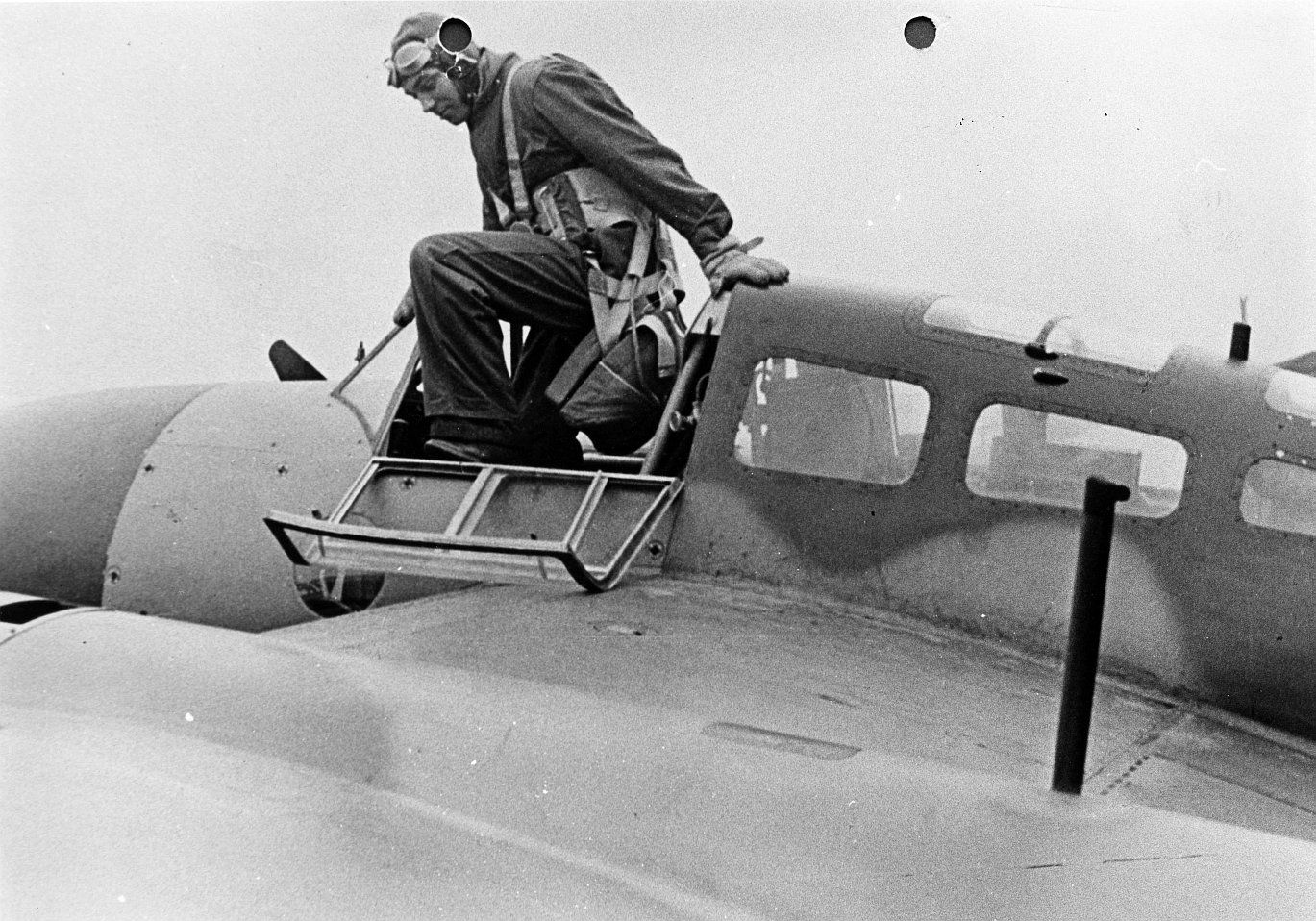
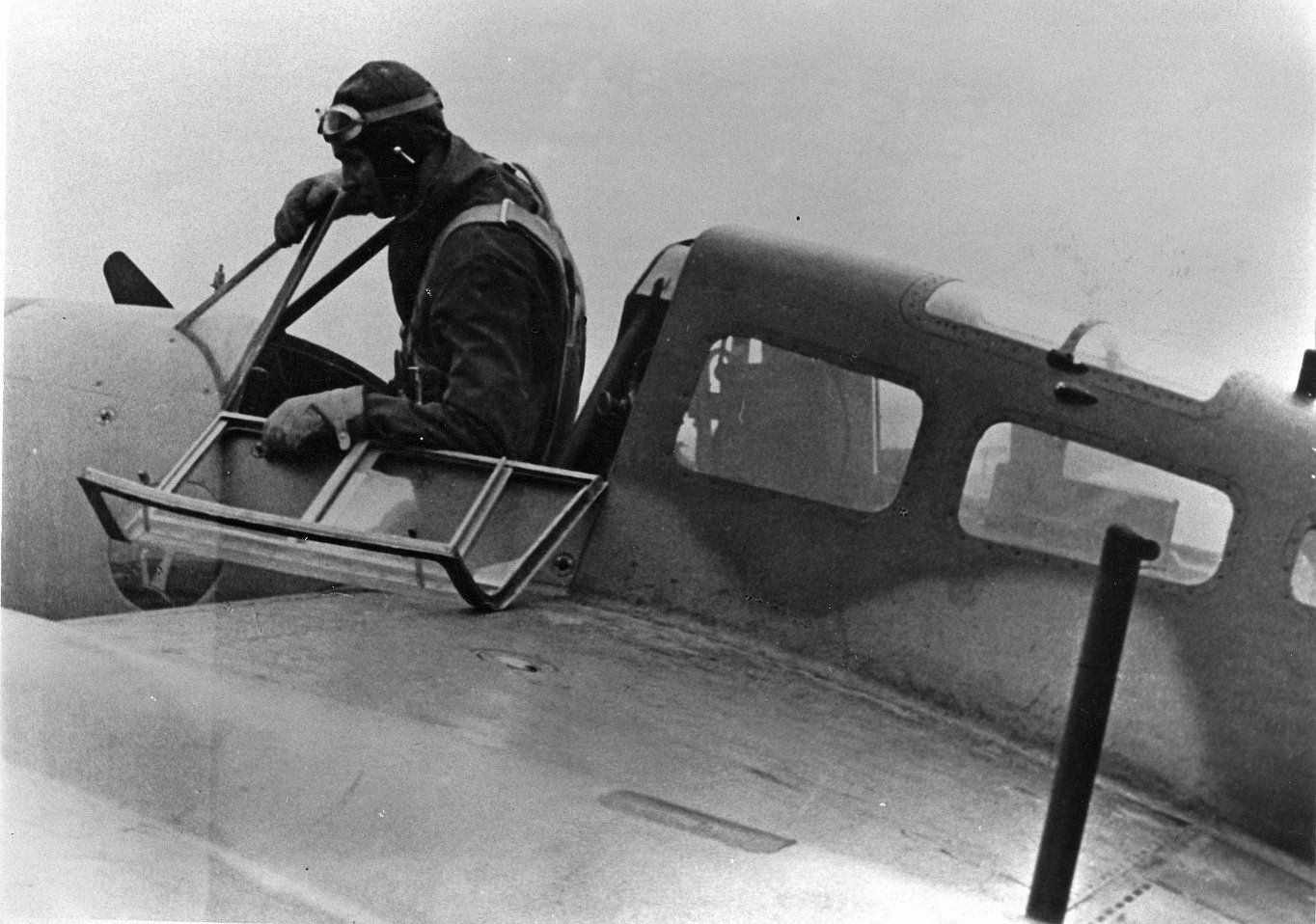
Presumably the pilot's exit procedure, in this case, pilot Gerben Sonderman. Note the attached parachute. After all, a re-entry is a riskier operation.Button -
22.2
The beginning of the exit procedure.Button -
23
The first, or one of the first, test flights. Note the enormous public interest from a great distance. The rudders are still in primer.Button -
24
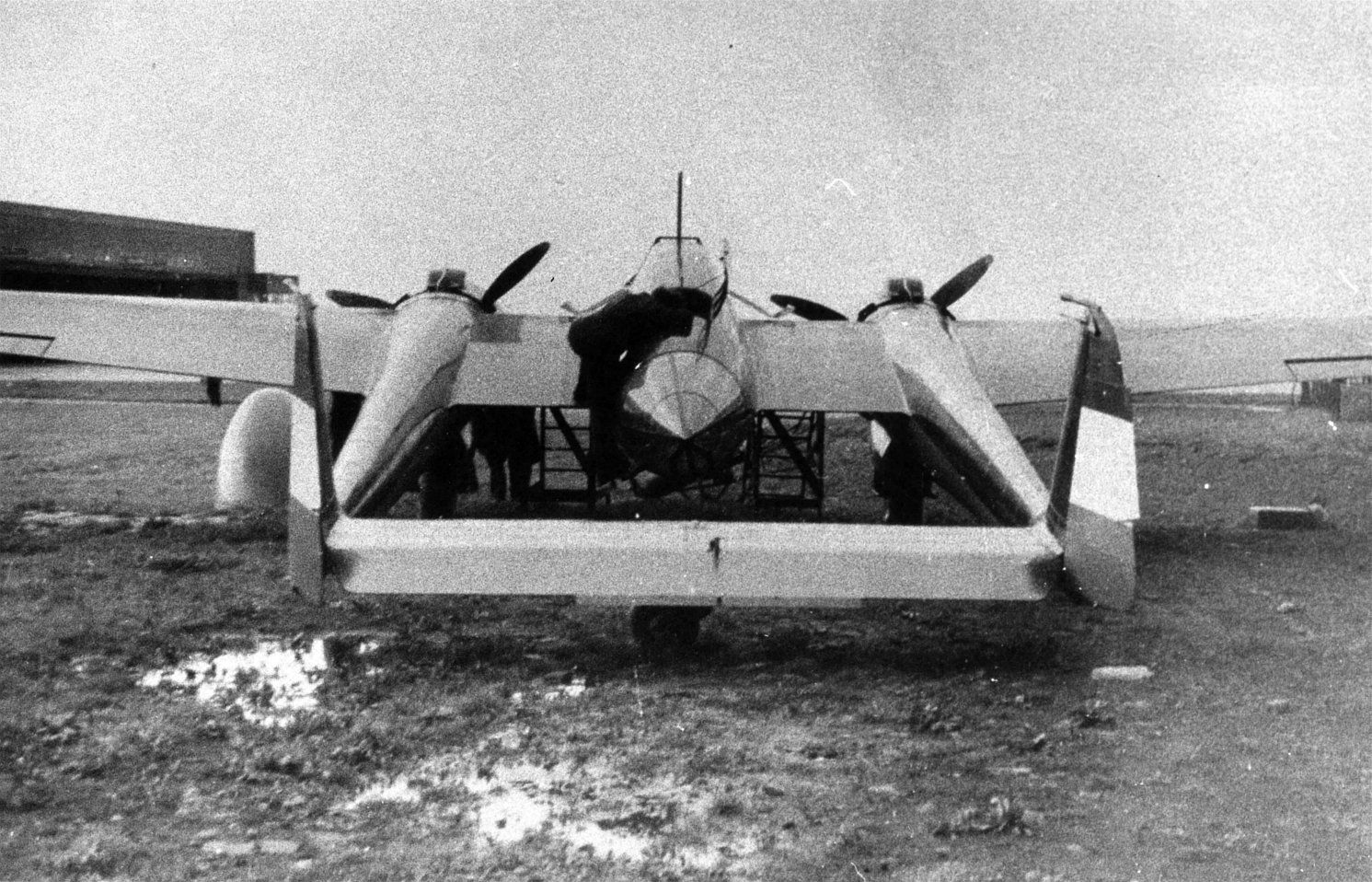
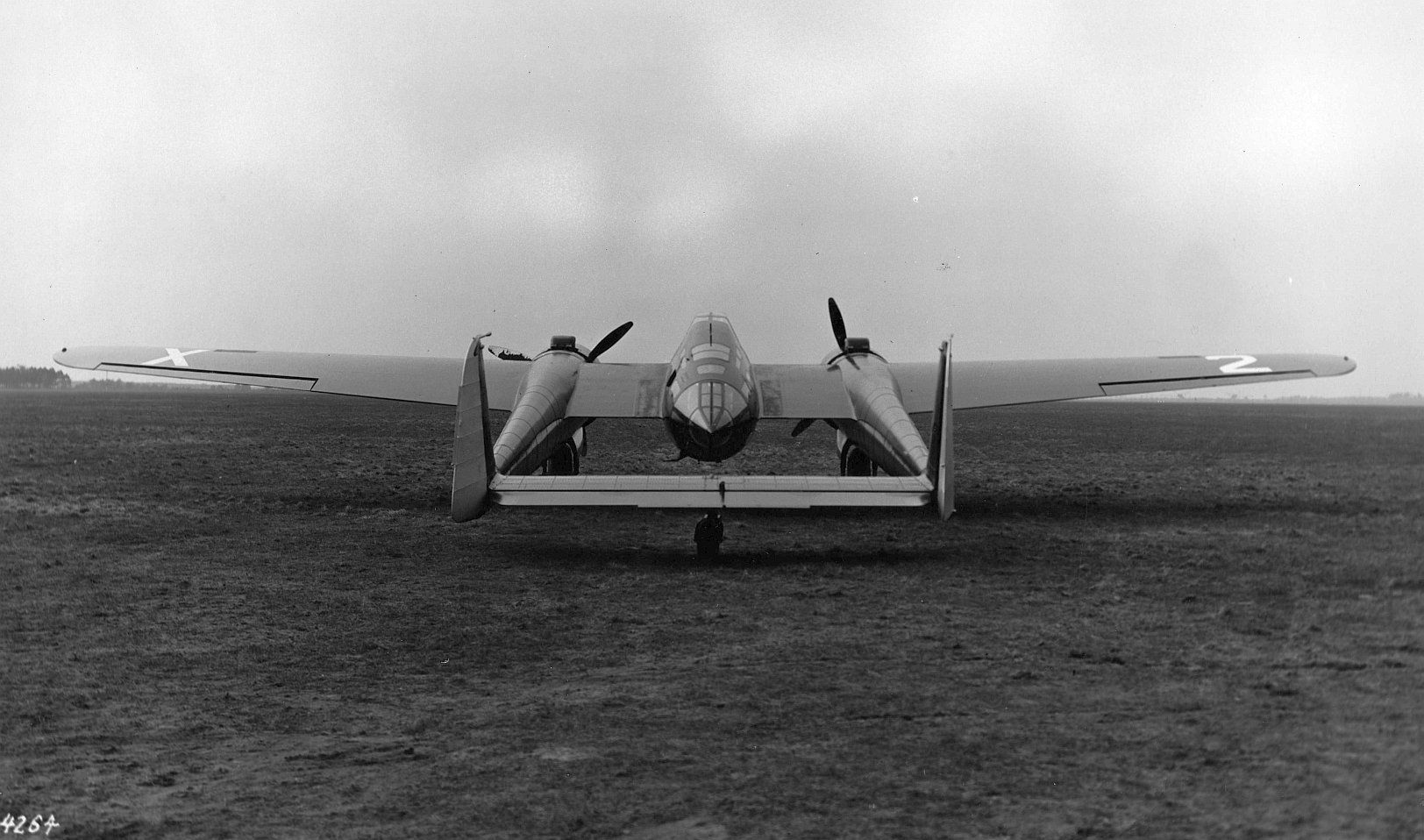
A not-so-common shot of the rear. The rudders are already sporting the red, white, and blue of the LVA. A little anticipation of things to come is also welcome.Button -
25
The right-hand view in the photo, after a test flight. The G.1 also has a mixed construction. The fuselage is made of welded steel tubing and covered with plywood. The nose is aluminum, and all transparent parts are made of Perspex glass.Button -
26
Other materials used include the wings. They are made in two sections, running under the fuselage, from Bakelite and plywood. The same applies to the stabilizer and the empennage section. The two characteristic tail booms are made of metal and run from the rear of the engine nacelle to the tail.Button -
27
A beautiful view from the right. Apparently after one of the test flights. In this photo, nothing of the rear fuselage is actually visible.Button -
28
And that's why the hull is fully visible in this photo. The plexiglass windows are shown to their full advantage here.Button -
29
The X-2 with some of its hatches open. The two tailplanes are still awaiting their red, white, and blue livery.Button -
29.1 (ex-04)
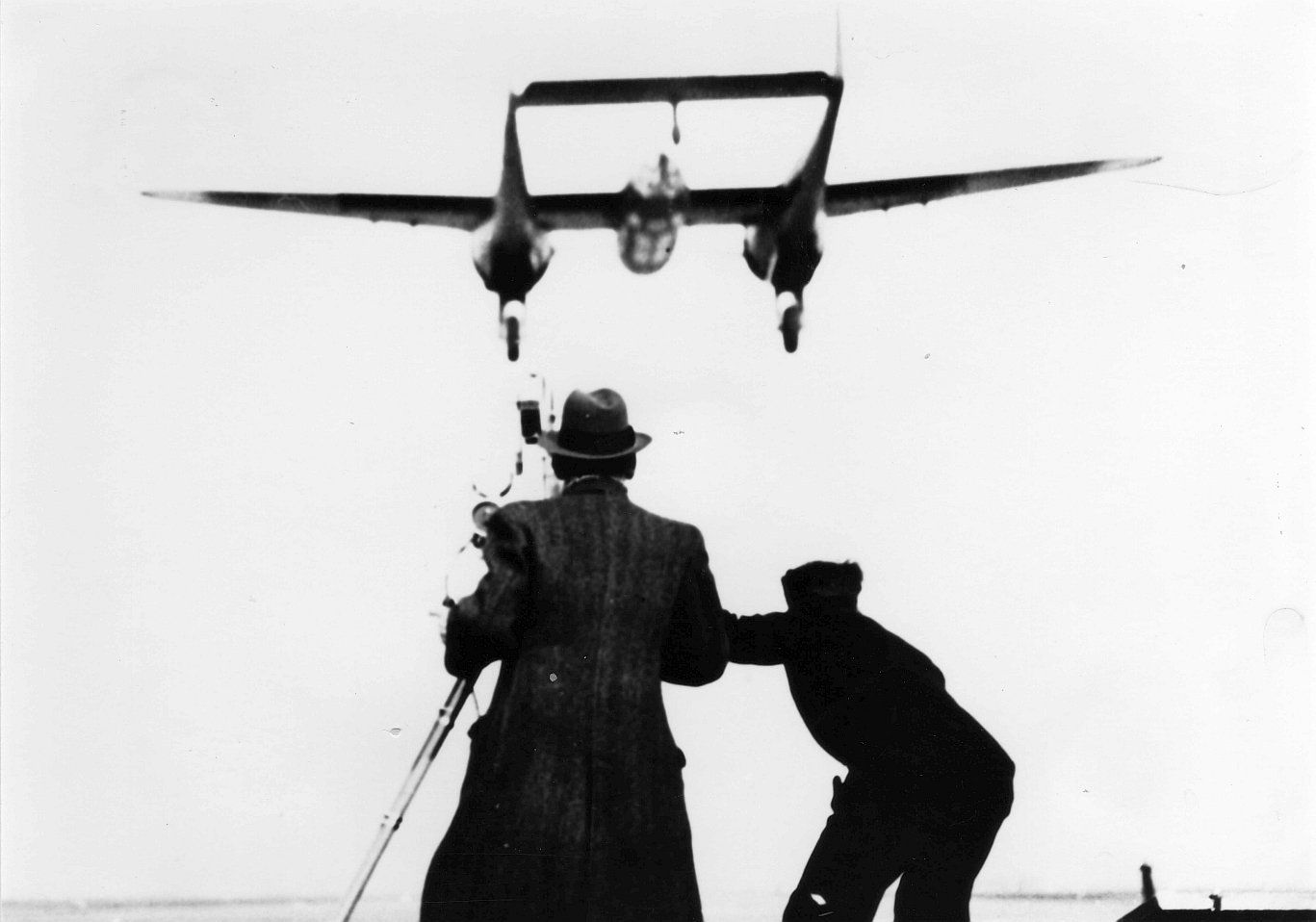
During the test flights, around 1937, filming was also done for all sorts of purposes. This later resulted in some beautiful footage of the X-2, which was then used for promotional material and newsreels. No wonder, really, since Anthony Fokker had already been an avid amateur filmmaker for many years. Here's a takeoff from Waalhaven-Rotterdam Airport.Button -
29.2 (ex-05)
One of the landings at Amsterdam Schiphol Airport. Our website also features a wonderful video of the prototype's actions.Button -
30
The G.1 is being tested near a Fokker hangar. This requires some additional technical support. Due to the impending acquisitions by the LVA (Dutch Air Force) and the Spanish Republicans, the test program is under time pressure. This increasingly requires more tests and measuring equipment.Button -
31
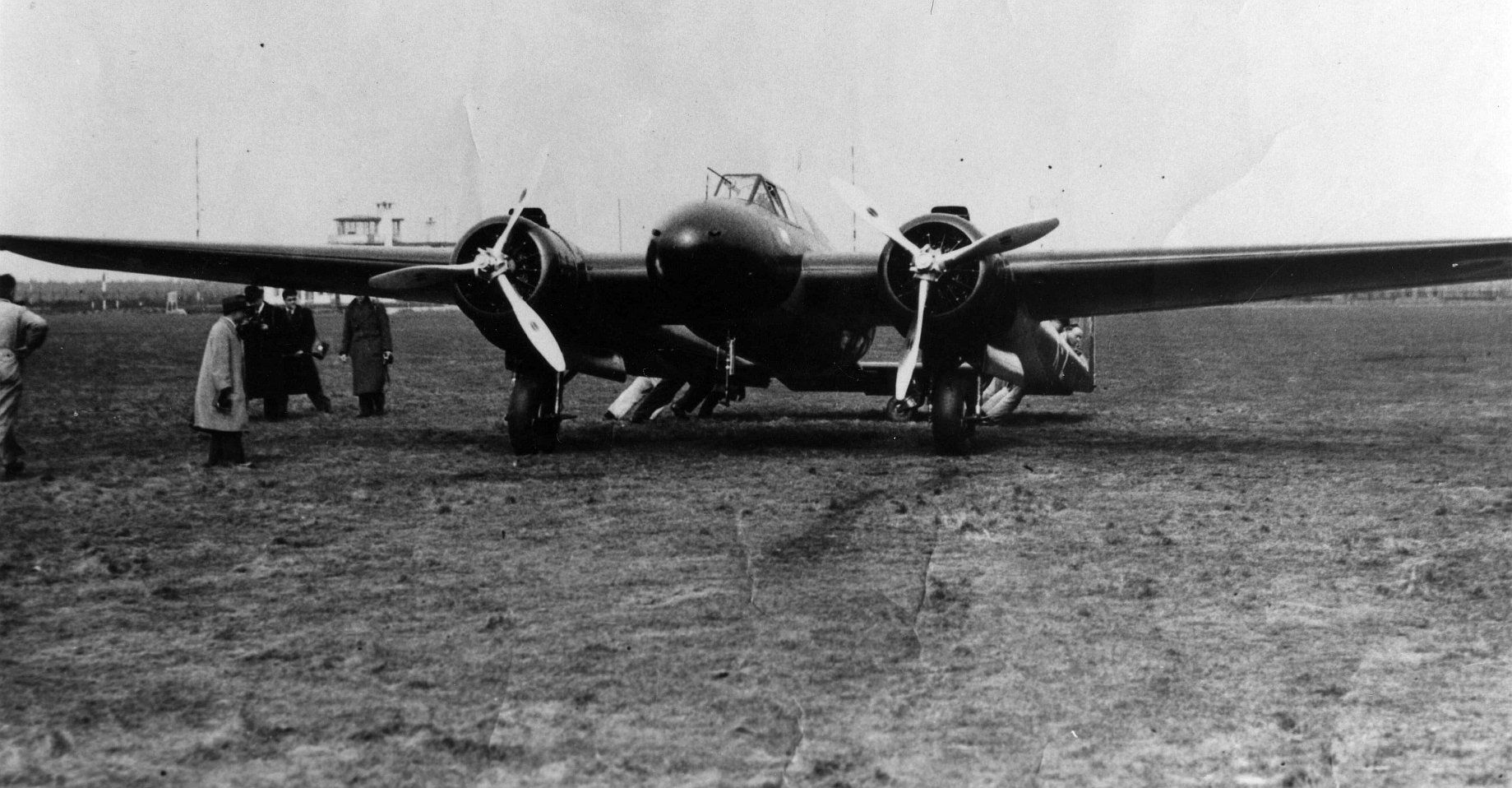
Apparently, the G.1 is being turned into the wind here. About five or six people are assigned to it. It's debatable whether we're at Welschap-Eindhoven or Waalhaven-Rotterdam. A fair amount of test flights were conducted at both airfields. A distinction must remain: see the four important spectators.Button -
32
There's a lot of remote interest in the G.1 test flight at Welschap-Eindhoven. The tailplane has already been painted red, white, and blue.Button -
33
In full flight and equipped with a lot of test equipment.Button -
34
The first flight of the X-2 is in preparation for March 16, 1937. The pilots Mares and/or Sonderman are almost ready to board. A surprising number of interested parties are present around the G.1. A puzzling group of young men in tailcoats on the left is standing. Furthermore, in the middle of the group is a soldier dressed in a light-colored uniform. This may have something to do with the then current interest from Republican Spain or from one of the Scandinavian countries.Button -
35
Also in this photo, the X-2 has quite a bit of test equipment.Button -
36
The Finns showed interest and made a test flight with the X-2 on June 22, 1937. On September 22, 1938, the Turkish pilot Enver Akaylou made a test flight. The first real order for twelve aircraft came from the Spanish Republicans. However, the end of the Spanish Civil War put an end to that possibility. Even a detour, offered by Estonia, to acquire the aircraft failed. After all, the Dutch government was neutral and refused to cooperate in the export. Finland ordered the twelve G.1B fighter cruisers intended for Spain in 1939 and wanted to increase that number to twenty-six aircraft. Again, the Dutch government refused to allow delivery. Follow this story in the G.1B section.Button -
36.2
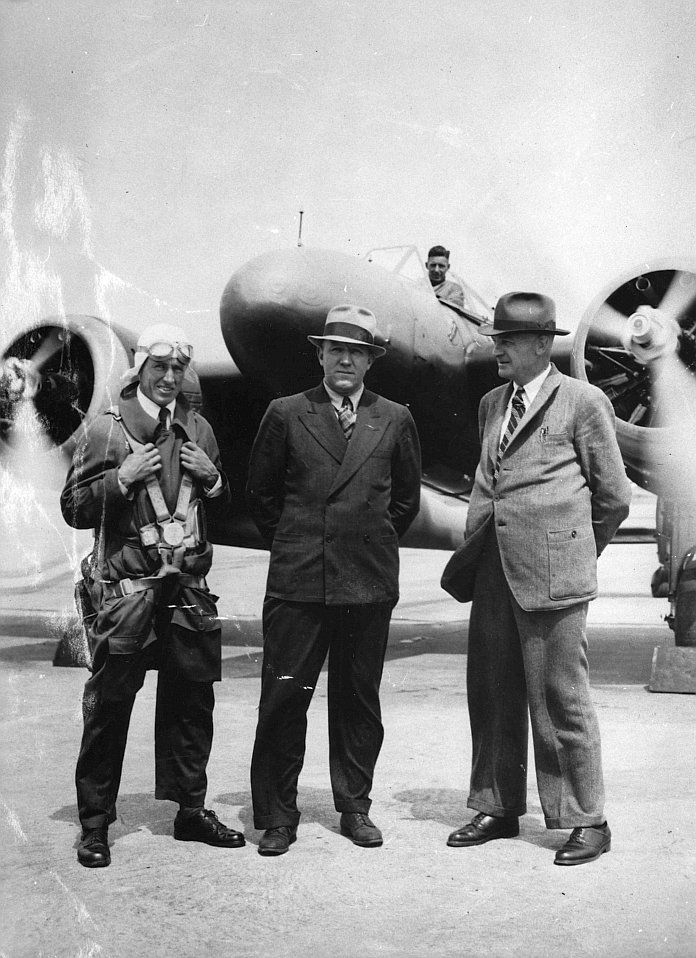
An important visit to Fokker-Schiphol in one of the two hangars of the Fokker facility. Sometime in 1938, a small delegation from the Ministry of War arrived. Among the group on the right is Anthony Fokker (left), personally providing explanations. Among the group on the left is the head of our country (right in black bowler hat), thoughtfully following the conversation. It is His Excellency Prime Minister Hendrik Colijn, prime minister from 1933 to 1939. The next photo also shows the X-2 in all its glory. Shortly thereafter, LVA will also take over this G.1 as G.1 B no. 341.Button