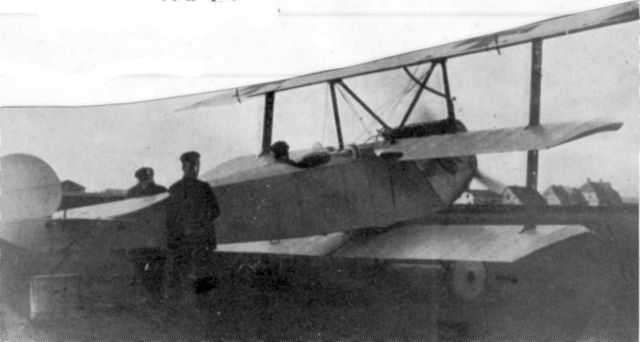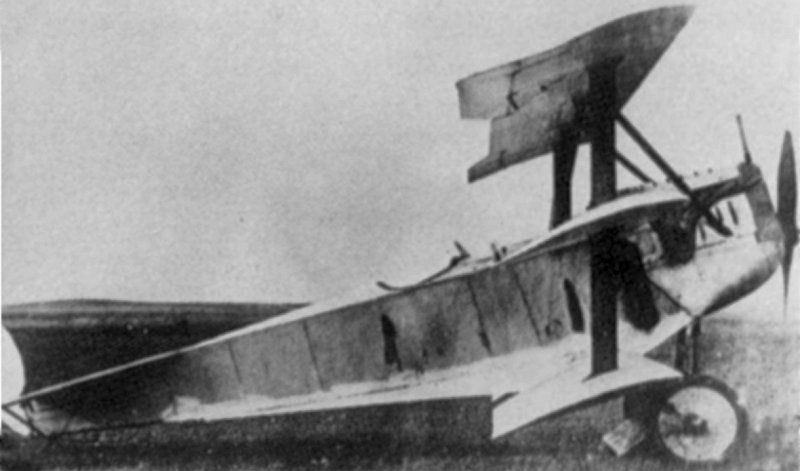
The Fokker V.6
The Fokker V.6 continued the line of triplane prototypes started by Fokker with the V.3.
This design line was strongly influenced by the arrival of the Sopwith triplane, unveiled by the Allies in late 1916 and appearing on the front in early 1917.
The Sopwith's manoeuvrability, rate of climb and high ceiling made it an immediate success against the slower, less manoeuvrable and more heavily armed Fokker biplanes.
This prompted Fokker to develop a competing type which eventually became the classic "Red Baron" Fokker Dr-I triplane described elsewhere on this site.
Due to the heavier 120 hp Mercedes II engine, the V.6 is larger in size than the V.5
The changes push the cockpit further back, further reducing forward visibility.
After a period of testing, it appears that the modified, heavier V.6 prototype adds little to the V.4 and V.5.
Maneuverability appears to be reduced compared to the competing V.5 prototype with its rotary engine.
As such, the V.5 prototype had an advantage over the V.6 as the basis for the upcoming Dr.I triplane fighter.
Click on the photo to enlarge the photo