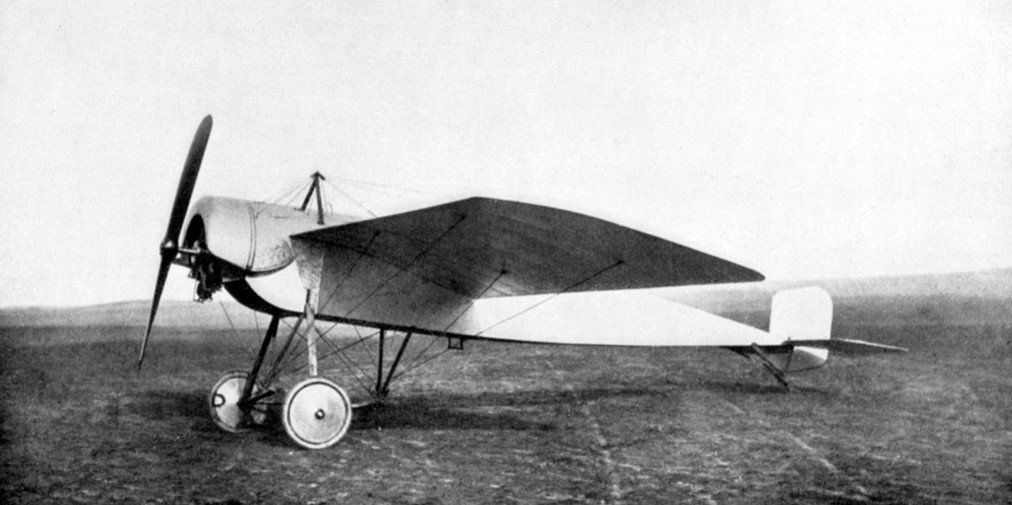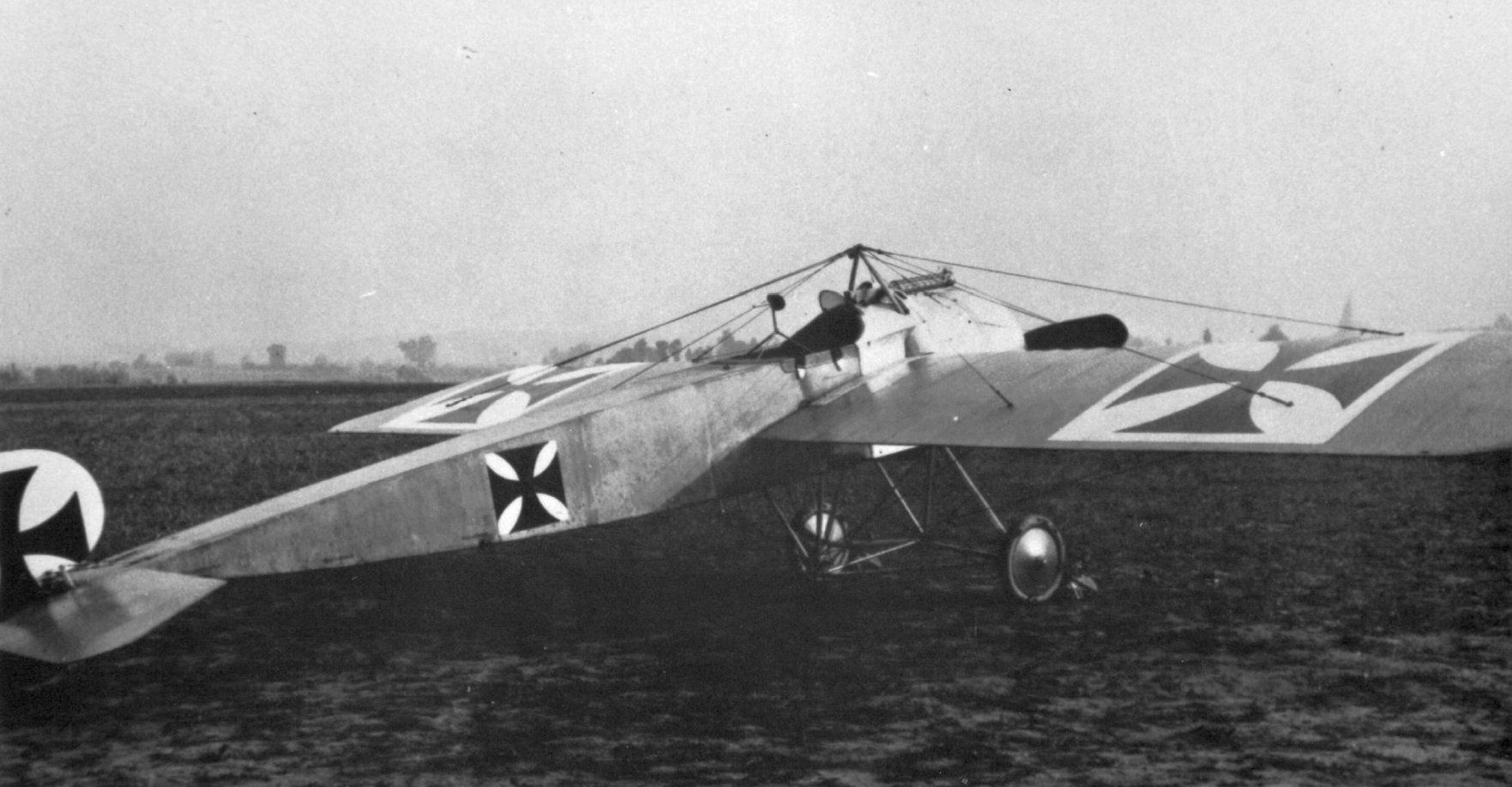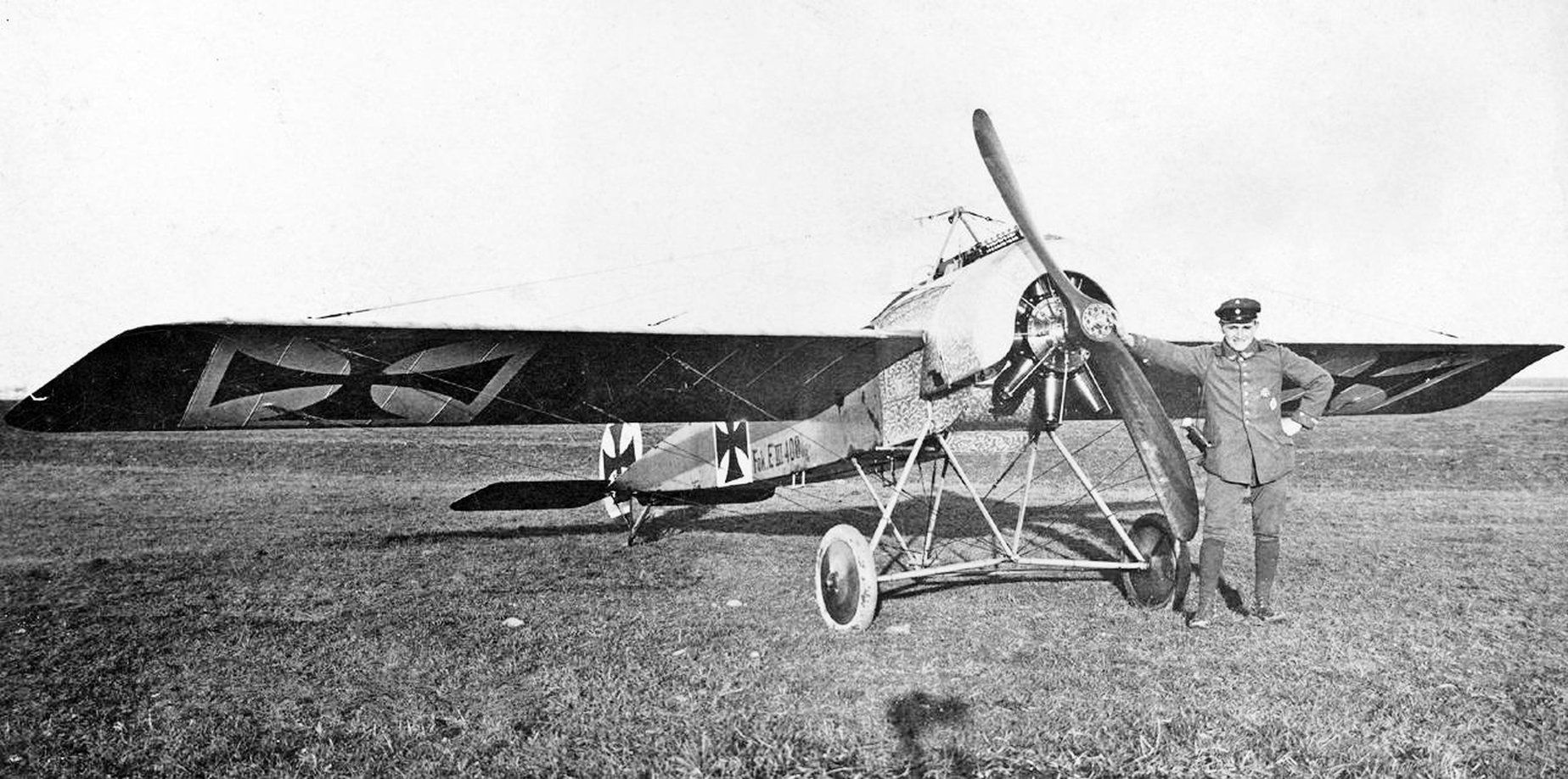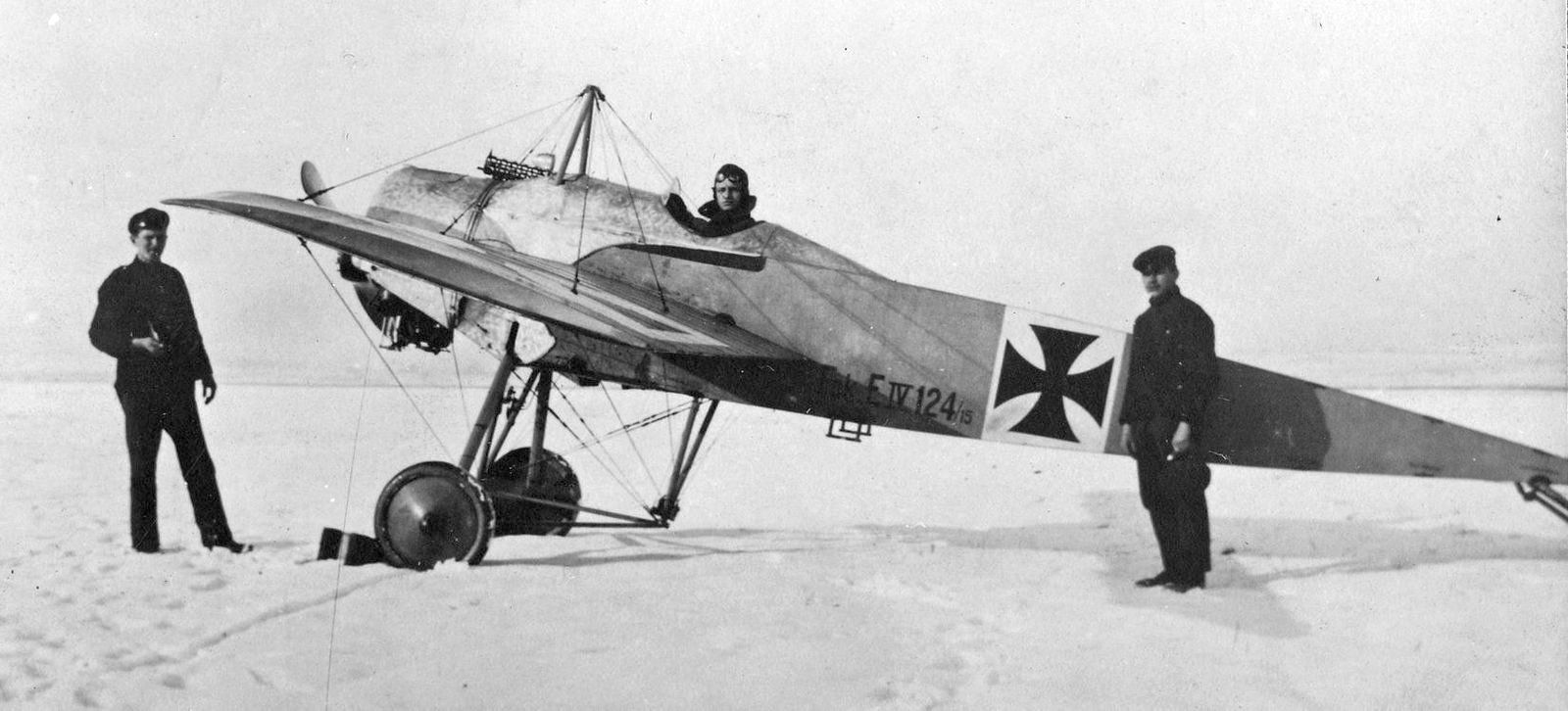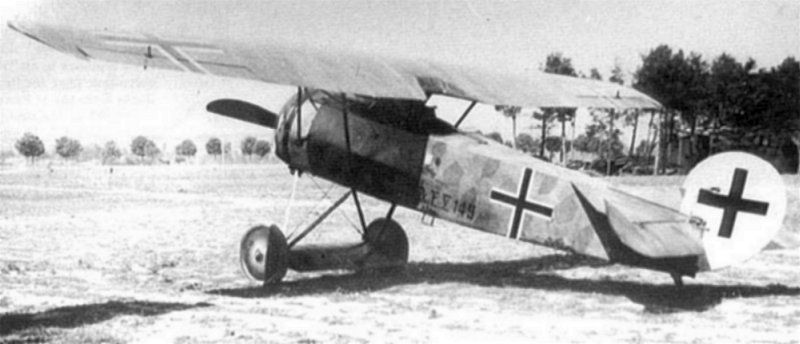
Overview page of the Fokker E-series
The Fokker “E” types are briefly discussed in the “M” versions, with a reference to them.
The “M” versions were the official “Military” flugzeug designations of Fokker.
However, the German army gave a number of “M” types the “E” designation for “Eindecker”.
Publicly, in books, publications, etc., the "E" types are often referred to as such, hence the choice for this designation here and for placing photos and texts of this type separately.
The “E” types or Eindeckers were the first Fokker aircraft to actually participate in aerial combat with the German army during the First World War.
Later, towards the end of the First World War, the Eindeckers were succeeded by other Fokker products, such as the Dr.1 triplane and the Fokker D-7.
The largest customer for the Eindeckers was the German army and navy, but the Eindeckers were also used by the Austro-Hungarian army and in Turkey.
The Eindeckers were built according to the Fokker principle: a fuselage of welded steel tubing, a wooden wing structure, and then the whole thing covered with linen. The linen was stretched with cellulose-based lacquer.
The German war pilots achieved many successes during aerial combat with a Fokker Eindecker, partly because the aircraft were extremely manoeuvrable.
On 1 August 1915, Lieutenant Max Immelmann achieved his first aerial victory with a Fokker EI (M.5K/MG), followed eighteen days later by Oswald Boelcke.
It was not long before the Fokker Eindeckers wreaked such havoc on Allied aircraft that people started calling them the “Fokker scourge”.
Despite the predominance of the Fokker Eindeckers, several were also destroyed in aerial combat.
A number of Eindeckers also suffered accidents or crashes under other circumstances.
The four Eindecker types listed below served with the German army until 1916.
In January 1916 the hegemony of the Fokker Eindeckers had already been broken by the arrival of the
Nieuport 11, from France and by the appearance of the first
Air conditioning DH.2 aircraft of the RFC (Royal Flying Corps), No. 24 Squadron from England.
The armament of the Eindeckers was not always reliable, the ammunition was not ideal for use in aircraft and the weapon itself was sensitive to cold.
It also took a long time for the Eindeckers to reach altitude; the E-III took about half an hour to reach an altitude of 3,000 metres.
With a total flight time of a maximum of one and a half hours, there was little time left for a dogfight.
During flight, fuel had to be regularly pumped manually from the main tank to a tank directly behind the engine. This was inconvenient for pilots during dogfights.
Of all the Eindecker types built, approximately 300 units, only one original example remains.
This E-III with wn 509 and registration 210-16 can be seen in the Science Museum in London.
Clicking on the photo will take you to the detailed description of the type.